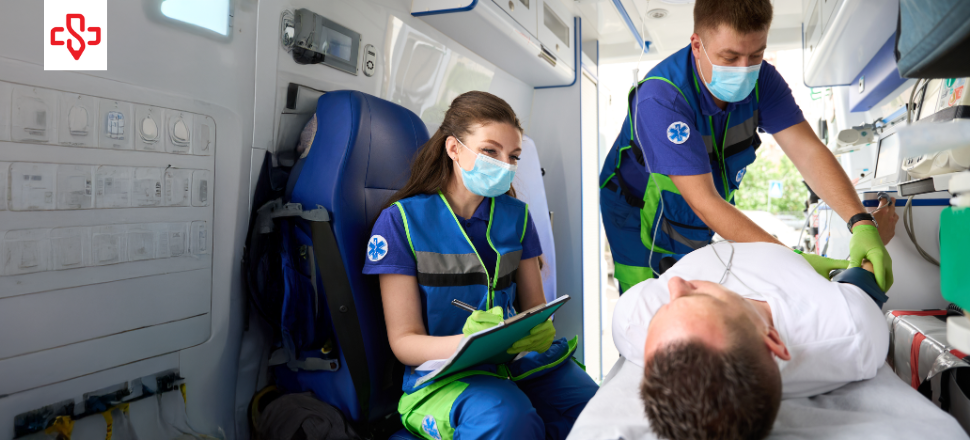
Emergency departments operate in one of the most demanding clinical environments, where high patient volumes, rapid decision-making, and complex documentation requirements converge. As hospitals increasingly rely on data to evaluate performance and outcomes, documentation quality plays a critical role. Emergency scribe support helps emergency teams capture accurate, timely data while allowing clinicians to stay focused on patient care.
Moreover, from reducing documentation gaps to improving workflow efficiency, emergency scribe delivers measurable value across clinical, operational, and financial metrics. By examining performance data from scribe-supported workflows, healthcare leaders can better understand the real impact of this model on emergency care delivery.
The Documentation Burden in Emergency Settings
Emergency clinicians must document detailed patient encounters while managing frequent interruptions and unpredictable case severity. According to the American Medical Association, physicians spend nearly 40–50% of their workday on EHR and administrative tasks. In emergency settings, this burden often delays chart completion and weakens data consistency.
As a result, incomplete or rushed documentation can disrupt care coordination, quality reporting, and reimbursement processes. Emergency scribe support addresses these challenges by enabling real-time documentation during patient encounters and ensuring that clinicians capture critical details accurately.
Improving Data Accuracy and EHR Quality
Accurate data supports patient safety, informed clinical decisions, and regulatory compliance. Emergency scribe support strengthens documentation completeness by capturing patient histories, assessments, procedures, and orders as events occur. This real-time approach eliminates reliance on memory-based charting at the end of long shifts.
Consequently, scribes reduce omissions and inconsistencies that often occur in high-pressure environments. Many organizations improve EHR reliability by addressing missing data through structured, scribe-supported documentation workflows.
Measuring Efficiency in High-Volume Emergency Departments
Patient throughput remains a key performance metric in emergency care. When clinicians spend less time navigating EHR systems, they can dedicate more attention to patient assessment and communication. Emergency scribe support streamlines workflows and helps providers manage demand more effectively.
A study said that ,On average, doctors report 15–20% greater efficiency in ERs where scribes are present. In high-acuity hospitals, this efficiency becomes essential. Many facilities depend on live emergency scribes to maintain consistent performance during peak patient volume.
Reducing After-Hours Charting and Clinician Fatigue
After-hours charting remains a major contributor to clinician fatigue and burnout in emergency medicine. Night shifts present additional challenges, as staffing levels decrease while patient acuity often remains high. Without support, documentation backlogs can grow quickly.
However, emergency scribe support allows clinicians to complete charts during patient encounters instead of after shifts. This approach reduces delayed documentation and helps resolve
night shift backlogs. At the same time, providers experience improved work-life balance and higher job satisfaction.
Financial and Operational Insights
From an operational standpoint, emergency scribe support improves billing accuracy and reduces claim denials. Complete documentation supports correct coding and strengthens revenue integrity. Additionally, hospitals often lower overtime costs and improve clinician retention through better workflow efficiency.
Operational metrics such as door-to-provider time, length of stay, and chart completion rates frequently improve after scribes join emergency workflows. These measurable outcomes allow hospital leaders to evaluate ROI using clear, data-driven indicators.
Using Data to Guide Emergency Care Strategy
As emergency departments adopt value-based care models, reliable documentation data becomes even more important. Emergency scribe support enhances the quality of information used for reporting, benchmarking, and performance improvement initiatives.
By improving documentation accuracy, supporting clinician efficiency, and strengthening operational metrics, emergency scribe support helps departments deliver safer and more sustainable care. For organizations focused on data-driven strategy, scribe programs represent a practical investment with measurable impact.
Conclusion
As emergency departments continue to rely on accurate data for clinical and operational decisions, the value of emergency scribe support becomes increasingly clear. By capturing documentation in real time, scribes reduce charting delays and improve data reliability across emergency settings.
When documentation remains complete and timely, emergency teams can focus on rapid decision-making and high-quality patient care. Measuring scribe impact through workflow efficiency, data accuracy, and clinician satisfaction allows hospitals to make informed, evidence-based investments.
Strengthening Emergency Care with the Right Scribe Partner
Hospitals aiming to improve emergency department performance can benefit from professionally managed scribe programs designed for high-acuity environments. With trained scribes supporting real-time documentation, organizations can reduce clinician burden and maintain consistent operational outcomes.
To learn how tailored emergency scribe solutions can support your goals, request a quote from Scribe.ology. Investing in the right scribe support helps emergency departments build a more efficient, data-driven, and sustainable care model.