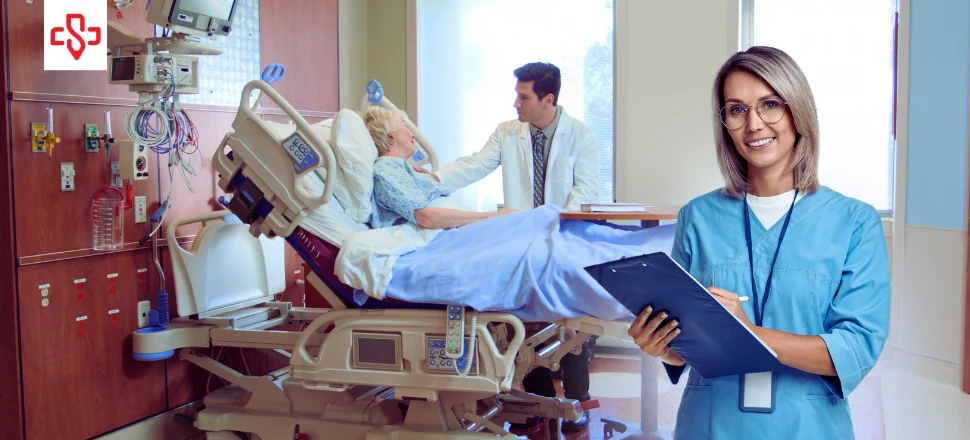

Emergency Departments (EDs) operate under constant pressure. Physicians must assess patients quickly, document encounters accurately, and make rapid treatment decisions—all while managing increasing patient volumes. However, documentation requirements in electronic health records (EHRs) often slow clinical workflows. As a result, patient throughput may suffer and discharge times can increase. This is where emergency medical scribes play a critical role. By handling real-time documentation, scribes help physicians focus on patient care while maintaining accurate records. More importantly, their support can significantly reduce door-to-discharge time, improving both operational efficiency and patient satisfaction in busy emergency departments.
Understanding Door-to-Discharge Time in Emergency Care
Door-to-discharge time refers to the total time a patient spends in the emergency department from arrival to discharge. Hospitals closely monitor this metric because it reflects operational efficiency, patient flow, and quality of care.
Longer discharge times often indicate bottlenecks in documentation, clinical decision-making, or patient processing. Physicians who must complete extensive charting while treating multiple patients may unintentionally slow down the overall workflow.
According to a widely cited study published in the Annals of Internal Medicine, physicians spend nearly two hours on EHR and desk work for every hour of direct patient care. This administrative burden can directly impact emergency department efficiency and delay patient discharge.
The Role of Emergency Medical Scribes
Physicians can focus on patient care while emergency medical scribes assist by documenting patient encounters in real time.
They record medical histories, physical examination findings, procedures, and clinical decisions directly into the EHR during patient visits.
Because documentation occurs simultaneously with patient care, physicians no longer need to spend large amounts of time completing charts after each encounter. Consequently, they can move on to the next patient more quickly, helping the department maintain a steady flow.
Furthermore, scribes ensure that charts remain organized, complete, and compliant with medical documentation standards. This efficiency contributes directly to the ability to reduce door-to-discharge time in busy emergency settings.
Statistical Impact on Emergency Department Efficiency
Research from the American College of Emergency Physicians suggests that medical scribes can improve physician productivity by up to 15–20%. When physicians see more patients per hour without compromising documentation quality, overall emergency department throughput improves.
Additionally, improved documentation speed allows providers to finalize charts sooner. Faster chart completion often translates into quicker discharge orders, faster patient turnover, and improved emergency department performance metrics.
How Scribes Streamline Emergency Department Workflows
Medical scribes influence several stages of the emergency care workflow. By supporting documentation and communication tasks, they help eliminate common delays that affect patient discharge times.
1. Real-Time Clinical Documentation
Scribes document patient encounters during examinations, ensuring the EHR reflects the physician’s findings immediately. This real-time entry reduces the need for later chart updates and speeds up clinical decision-making.
2. Faster Chart Completion
Because documentation occurs simultaneously with treatment, physicians can complete patient charts shortly after the encounter. This helps avoid backlogs that often delay discharge processing.
3. Improved Communication Between Care Teams
Scribes maintain accurate documentation that supports communication among nurses, specialists, and diagnostic teams. When clinical information is readily available, patient care coordination becomes faster and more efficient.
4. Reduced Administrative Burden
By removing much of the documentation workload, scribes allow physicians to focus entirely on evaluating patients and making clinical decisions. This improved focus leads to faster diagnosis and treatment planning.
Illustration: Workflow With and Without Emergency Medical Scribes
| Workflow Stage | Without Scribes | With Emergency Medical Scribes |
|---|---|---|
| Patient Assessment | Physician alternates between patient care and documentation | Physician focuses on patient while scribe records information |
| Charting | Completed after patient encounter | Documented in real time |
| Order Documentation | Entered after examination | Prepared immediately during encounter |
| Chart Completion | Often delayed until end of shift | Completed shortly after patient visit |
| Patient Discharge | Delayed due to documentation backlog | Faster discharge process |
Impact on Patient Experience
Shorter wait times and faster discharge processes significantly improve patient satisfaction. Patients visiting emergency departments often experience stress and anxiety, particularly when treatment delays occur.
When emergency departments operate efficiently, patients receive timely updates, quicker treatment, and faster discharge instructions. These improvements enhance overall patient experience and hospital reputation.
Studies have also linked scribe programs to higher satisfaction scores in emergency departments. For example, this analysis on ER patient satisfaction improvements demonstrates how documentation support can positively affect patient perceptions of care quality.
Reducing Physician Burnout While Improving Efficiency
Emergency physicians frequently face burnout due to heavy workloads and administrative responsibilities. Documentation tasks performed after shifts—sometimes called “pajama time”—can extend the workday and increase stress.
Medical scribes help alleviate this burden by handling the majority of documentation responsibilities during patient encounters. Physicians can complete their shifts with minimal unfinished charting, improving both work-life balance and job satisfaction.
Reduced burnout also leads to improved clinical performance. When physicians can focus on patient care instead of administrative tasks, they work more efficiently and maintain better attention to clinical detail.
Long-Term Operational Benefits for Hospitals
Beyond improving individual physician productivity, emergency medical scribes contribute to long-term operational improvements across healthcare organizations.
Hospitals that implement scribe programs often experience measurable improvements in throughput metrics, patient flow management, and documentation accuracy. These improvements can support compliance, reduce claim denials, and strengthen revenue cycle performance.
Most importantly, better workflow efficiency allows emergency departments to handle increasing patient volumes without sacrificing care quality.
Conclusion
Emergency departments face growing pressure to manage high patient volumes while maintaining accurate documentation and high-quality care. However, documentation demands within EHR systems can create workflow bottlenecks that delay patient discharge and reduce overall efficiency.
Emergency medical scribes provide an effective solution by handling real-time documentation, improving communication among care teams, and enabling physicians to focus fully on patient care. As a result, healthcare organizations can successfully reduce door-to-discharge time, improve patient satisfaction, and support physician productivity.
If your emergency department is looking for ways to streamline documentation and improve operational efficiency, professional scribe support may be the solution.