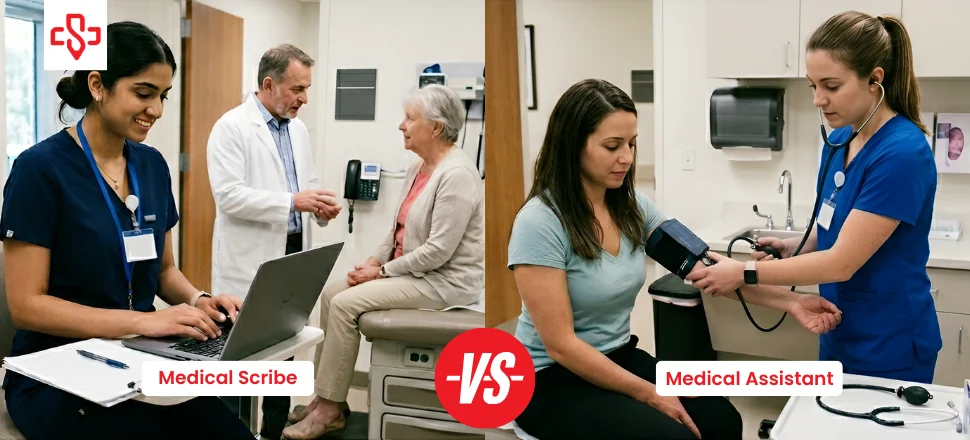

Modern healthcare has made clinical documentation a core part of everyday practice. While essential for compliance, coding, and patient safety, this shift has placed a heavy burden on physicians. Many doctors now spend more time typing into electronic health records than engaging with patients. This imbalance leads to frustration, burnout, and reduced productivity. Medical scribes have emerged as a transformational solution, helping physicians shift from administrative overload to efficient, patient-centered care. Understanding the benefits of medical scribes shows why this role is becoming essential in clinics, hospitals, and specialty practices across the country.
The Administrative Load Draining Physician Efficiency
Doctors today face increasing documentation demands. Instead of focusing on diagnoses and treatment, providers spend much of their day on EHR tasks such as entering histories, coding visits, updating orders, and meeting compliance requirements.
Statistics highlight the severity of the problem
- Physicians spend nearly 50% of their workday on documentation.
- For every 1 hour of patient care, doctors spend 2 hours on administrative tasks.
- Up to 71% of physicians report that EHR documentation reduces their efficiency.
- More than 60% of doctors experience burnout, mainly driven by administrative burdens.
Scribes relieve this pressure by handling documentation in real time, allowing physicians to focus on patient care rather than data entry.
How Medical Scribes Improve Patient-Physician Interaction
One of the most immediate improvements that physicians notice with scribes is the quality of their interactions with patients. Without the distraction of typing, clicking, and switching screens, doctors can engage fully with the patient.
Benefits of patient communication
- More eye contact and a genuine connection
- Deeper listening without multitasking
- Better understanding of patient symptoms and concerns
- Increased trust and comfort during visits
- Improved clarity in explaining diagnoses and treatment plans
Studies show that patient satisfaction scores rise significantly when scribes are used, as consultations feel more personal, focused, and thorough.
Enhanced Documentation Accuracy and Quality
Accurate and complete documentation is essential for clinical safety, continuity of care, and proper billing. Medical scribes ensure that every part of the encounter is captured thoroughly and consistently.
How scribes improve documentation
- Detailed histories and exam findings
- Accurate medical decision-making notes
- Correct application of templates and clinical terminology
- Fewer missing details due to real-time documentation
- More structured, readable, and organized EHR entries
High-quality documentation reduces compliance risks, supports accurate coding, and prevents claim denials—benefits that medical scribes deliver directly to providers and organizations.
Significant Boost in Physician Efficiency
Doctors who work with scribes consistently report significant increases in productivity. When a physician doesn’t need to worry about charting, they can move smoothly from one patient to the next.
Efficiency improvements are commonly seen
- 20% to 40% increase in provider productivity
- Ability to see 2–4 additional patients per day
- Reduced charting time during and after clinic hours
- Faster room-to-room transitions
- More on-time clinic schedules and fewer delays
These efficiency gains help practices expand capacity without adding more providers—critical in an era of physician shortages and increasing demand for care.
Burnout Reduction and Better Work-Life Balance
Burnout is one of the most serious challenges in healthcare. The constant pressure to complete charts, respond to inbox messages, and meet regulatory requirements often leaves many physicians feeling emotionally exhausted.
- How scribes help reduce burnout
- Less after-hours charting
- Lower cognitive load
- Reduced stress throughout the workday
- More time with patients and less time with computers
- Increased sense of professional fulfillment
When charts are completed in real time with scribe support, physicians can end their shifts on time and enjoy a healthier work-life balance.
Financial Benefits for Providers and Healthcare Organizations
One of the most overlooked advantages is the financial value scribes create. Doctors and healthcare organizations can significantly benefit from medical scribes, as improved documentation and increased patient volume translate into stronger revenue performance.
Financial advantages include
- More accurate coding and fewer missed charges
- Higher level-of-service documentation
- Increased reimbursement due to complete charts
- More daily patient encounters without extending hours
- Reduced turnover costs because physicians stay longer
Considering that replacing a single physician can cost a healthcare organization $500,000 or more, scribes are also a strategic retention investment.
Improved Compliance and Reduced Risk
Regulatory compliance is increasingly complex. Scribes are trained to follow HIPAA, CMS, and facility documentation guidelines to ensure notes meet required standards.
Risk-reduction benefits
Stronger documentation supporting medical necessity
- Improved legal defensibility during audits or disputes
- Fewer errors caused by rushed or incomplete charting
- Accurate capture of physician decision-making
- Proper recording of procedures, follow-ups, and critical findings
This enhances clinician protection and improves the overall quality of medical records.
Better Workflow Across the Entire Care Team
Scribes do more than take notes—they support smooth coordination among clinical staff. Their presence improves communication and reduces delays.
Workflow improvements
- Faster retrieval of lab and imaging results
- Efficient EHR navigation for the physician
- Better sequencing of tasks during encounters
- Reduced burden on nurses and support staff
- Smoother transitions in high-volume environments like the ED
Over time, scribes learn the provider’s preferences, making the workflow even more seamless.
Remote Scribing: A Modern and Flexible Solution
The rise of remote medical scribes has expanded access to documentation support. Through secure virtual connections, scribes document visits in real time from off-site locations.
Advantages of remote scribes
- No need for physical space in exam rooms
- Lower program costs
- Easy scaling for multi-site practices
- Ideal for telehealth and hybrid-care models
- Availability regardless of geographical constraints
This flexibility makes it easier for practices of all sizes to integrate documentation support.
Conclusion: From Frustration to Efficiency
The growing administrative burden in healthcare has pushed many physicians to the brink of frustration and burnout. Medical scribes offer a robust and proven solution by restoring time, improving accuracy, and enhancing the patient-physician relationship. The benefits of medical scribes go far beyond documentation; they improve efficiency, protect provider well-being, strengthen compliance, enhance financial performance, and elevate the overall patient experience.
As healthcare continues to evolve, scribes are becoming a vital component of modern clinical care. Doctors seeking to work more efficiently, reduce stress, and reconnect with patients can genuinely benefit from medical scribes, making them one of the most impactful resources available today.
Unlock Efficiency & Focus on Patient Care
With Scribe.ology, you are not just hiring a scribe — you are empowering your practice. Our professional scribes take over time‑consuming documentation so you can concentrate on what matters most: your patients. Real‑time charting, seamless EHR integration, and accurate records translate into shorter visits, more meaningful patient interactions, and increased clinic throughput. Join dozens of hospitals and clinics that have already boosted productivity, reduced physician burnout, and delivered better care with Scribe.ology on their team. Request your quote today and discover how smoothly your practice can run.