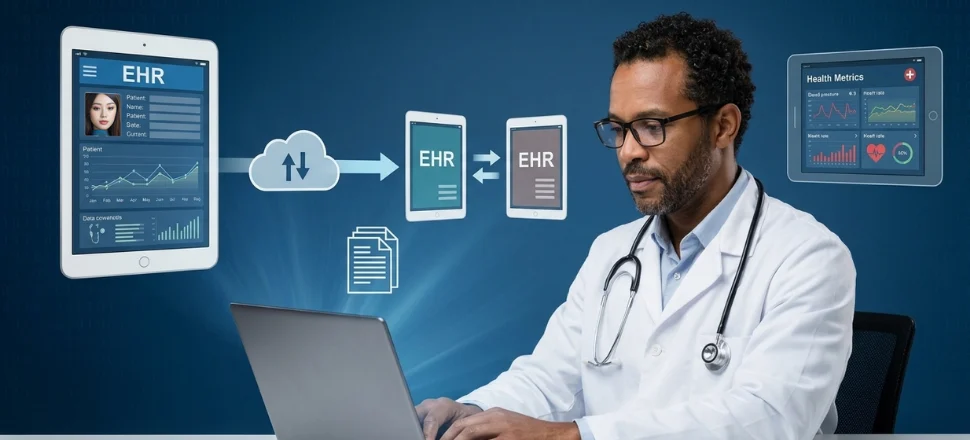
Electronic Health Record (EHR) upgrades and system migrations are critical for improving healthcare technology, but they often create temporary disruptions in clinical workflows. During these transitions, physicians must adapt to new interfaces, updated documentation processes, and unfamiliar system features. As a result, productivity may decline, and documentation accuracy can suffer. This is where medical scribes for EHR migration play a vital role in maintaining continuity and efficiency.
Challenges During an EHR Upgrade or Migration
EHR transitions often introduce several challenges for healthcare organizations. Physicians must learn new workflows while continuing to deliver patient care. This adjustment period can lead to slower documentation, increased frustration, and potential errors in patient records.
Studies show that physician productivity can drop by 15–20% during the initial phase of an EHR implementation. This decline highlights the need for additional support systems that help maintain efficiency during the transition.
In addition, unfamiliar interfaces and updated templates can make it difficult for providers to document patient encounters accurately. Without proper support, these challenges may impact both patient care and operational performance.
How Medical Scribes Support EHR Migration
Medical scribes work alongside physicians to document patient encounters in real time, even as systems change. Their familiarity with documentation workflows allows them to quickly adapt to new EHR platforms and assist physicians in navigating updated systems.
By handling documentation tasks, scribes reduce the cognitive load on physicians, allowing them to focus on patient care instead of system navigation. This support is especially valuable during the early stages of an EHR migration.
Healthcare organizations that prioritize efficient documentation processes often benefit from improved workflows. Learn more about optimizing documentation in EHR efficiency in busy clinical settings.
Maintaining Documentation Accuracy During Transition
Accuracy is one of the biggest concerns during an EHR upgrade. When physicians adjust to new systems, they may unintentionally omit details or struggle with new templates. Medical scribes for EHR migration help prevent these issues by ensuring that documentation remains thorough and structured.
Because scribes document encounters in real time, they reduce the risk of missed information. Their ability to quickly adapt to new templates ensures that patient records remain consistent and compliant.
Reducing Physician Burnout
EHR transitions often increase stress levels among physicians due to added documentation demands and workflow changes. Scribes help reduce this burden by managing documentation tasks, allowing physicians to focus on clinical decision-making.
Research shows that medical scribes can improve physician productivity by approximately 15–25%, with some settings reporting gains approaching 30%, particularly in documentation-heavy environments. This improvement helps healthcare providers maintain productivity during EHR transitions.
Supporting Workflow Continuity
Continuity of care depends on accurate and timely documentation. During an EHR migration, disruptions in documentation workflows can affect communication among healthcare teams. Medical scribes help maintain continuity by ensuring that patient records remain updated and accessible.
Additionally, scribes can assist with structured documentation formats, including templated notes. Explore how this approach works in templated documentation support.
Comparison: Workflow With and Without Scribes During EHR Migration
| Without Scribes | With Medical Scribes |
|---|---|
| Physicians learn new EHR while documenting | Scribes assist with real-time documentation |
| Increased documentation errors | Improved accuracy and completeness |
| Longer patient visit times | Efficient and streamlined workflows |
| Higher physician stress | Reduced administrative burden |
| Delayed documentation completion | Documentation completed during visits |
The Long-Term Benefits of Using Scribes
While medical scribes provide immediate support during EHR migration, their benefits extend beyond the transition period. Once physicians become familiar with the new system, scribes continue to improve documentation quality and workflow efficiency.
Healthcare organizations that integrate medical scribes into their workflows often experience better documentation consistency, improved patient satisfaction, and stronger operational performance.
Conclusion
EHR upgrades and migrations are essential for modern healthcare systems, but they can temporarily disrupt clinical workflows. Medical scribes for EHR migration help bridge this gap by supporting physicians with real-time documentation, improving accuracy, and maintaining efficiency during transitions.
By reducing administrative burden and ensuring consistent documentation, scribes enable healthcare providers to navigate system changes without compromising patient care. As a result, organizations can successfully transition to new EHR systems while maintaining high standards of clinical documentation.
Healthcare organizations looking to streamline EHR transitions can benefit from professional scribing support. Request a quote today to learn how customized medical scribe solutions can support your EHR migration and improve overall clinical efficiency.