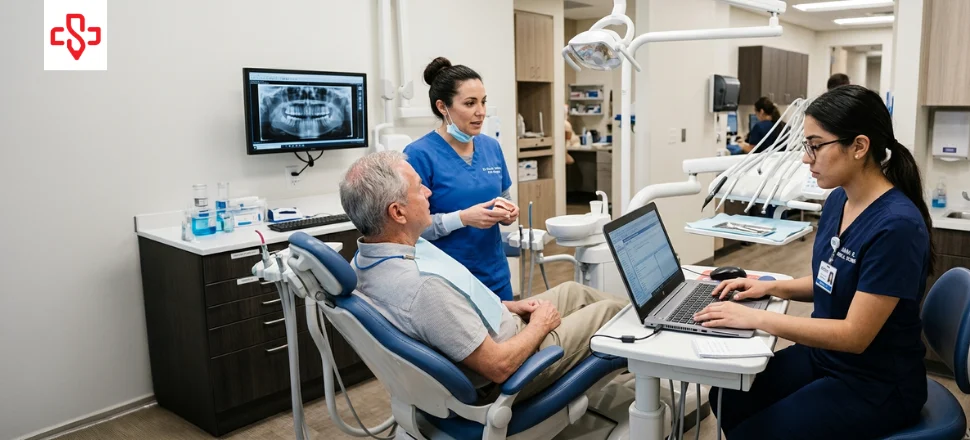

Physician burnout continues to be one of the most pressing challenges in modern healthcare. As we move into 2026, rising documentation demands, administrative workload, and long clinical hours are pushing more physicians toward fatigue and disengagement. Therefore, healthcare organizations are increasingly turning to scribes for burnout relief as a practical and effective solution.
Medical scribes help reduce the burden of documentation by handling real-time charting, allowing physicians to focus on patient care. As a result, they play a key role in improving both provider well-being and clinical efficiency.
Physician Burnout Statistics 2026
Recent studies highlight the growing severity of burnout among physicians. For instance, according to industry reports, over 55% of physicians report experiencing burnout symptoms in 2026. Additionally, documentation burden remains one of the top contributing factors.
Furthermore, physicians spend nearly 1.5 to 2 hours on documentation for every hour of patient care. As a result, this imbalance significantly impacts work-life balance and contributes to emotional exhaustion.
Burnout Drivers Chart (2026)
| Factor | Impact Level |
|---|---|
| Documentation Burden | High |
| Long Working Hours | High |
| Administrative Tasks | Moderate to High |
| EHR Complexity | Moderate |
| Work-Life Imbalance | High |
Why Documentation Is a Leading Cause of Burnout
Documentation remains one of the most time-consuming responsibilities for physicians. In addition to patient care, providers must complete detailed notes, update electronic health records, and ensure compliance with regulatory requirements.
Consequently, many physicians spend hours after clinic completing charts. This “pajama time” not only reduces personal time but also increases mental fatigue. Therefore, reducing documentation burden has become a top priority in addressing burnout.
How Scribes for Burnout Relief Make a Difference
Scribes for burnout relief support physicians by managing documentation tasks in real time. In doing so, they significantly reduce the administrative workload that contributes to burnout.
Moreover, scribes accompany physicians during patient encounters and document everything directly into the EHR. As a result, physicians can focus entirely on patient care rather than splitting attention between the patient and the computer.
1. Reducing Documentation Time
One of the biggest advantages of using scribes is the reduction in documentation time. As a result, physicians no longer need to spend hours completing notes after clinic. In burnout support strategies, real-time documentation plays a key role in reducing stress.
2. Improving Work-Life Balance
By eliminating after-hours charting, scribes help physicians regain personal time. Consequently, this improves work-life balance and reduces emotional exhaustion.
3. Enhancing Patient Interaction
When physicians are not focused on typing, they can engage more meaningfully with patients. In turn, this not only improves patient satisfaction but also enhances the overall provider experience.
4. Increasing Productivity
Studies show that medical scribes can improve physician productivity by 20–30%. Therefore, providers can see more patients without increasing their workload.
Table: Burnout Without vs With Scribes
| Without Scribes | With Scribes |
|---|---|
| High documentation burden | Reduced documentation workload |
| Frequent after-hours charting | Minimal after-hours work |
| Limited patient interaction | Improved patient engagement |
| Increased stress levels | Lower stress and fatigue |
| Lower productivity | Higher efficiency |
The Financial and Operational Impact
Burnout not only affects physicians but also impacts healthcare organizations. As a result, high burnout rates lead to lower productivity, increased turnover, and higher recruitment costs.
By implementing scribes for burnout relief, organizations can, therefore, improve efficiency while reducing costs associated with physician dissatisfaction.
Additionally, explore more about value and efficiency in medical scribe value, where the operational benefits are clearly outlined.
Why Scribes Are a Long-Term Solution
Unlike temporary fixes, scribes provide a sustainable solution to documentation challenges. Moreover, they integrate directly into clinical workflows and adapt to provider preferences.
As healthcare continues to evolve, the demand for efficient documentation support will only increase. Therefore, investing in scribes is a forward-thinking strategy for long-term success.
Conclusion
Physician burnout remains a major concern in 2026, driven largely by documentation burden and administrative workload. However, scribes for burnout relief offer a practical and effective solution.
By reducing documentation time, improving workflow efficiency, and enhancing patient interaction, scribes help physicians regain control over their schedules and well-being.
Ultimately, adopting scribe solutions benefits not only physicians but also healthcare organizations and patients.
Get Started with Scribe Support
If your organization is looking to reduce physician burnout and improve clinical efficiency, professional scribe services can make a significant difference. At Scribe.ology, we provide trained scribes who integrate seamlessly into your workflow and support real-time documentation.
Now is the time to invest in scribes for burnout relief and create a more sustainable healthcare environment. Get a quote today to learn how our solutions can support your team.