
Endocrinology is one of the most data-intensive specialties in modern healthcare. Physicians must monitor chronic conditions such as diabetes, thyroid disorders, hormonal imbalances, and metabolic diseases over long periods of time. Each patient visit requires careful review of laboratory results, medication adjustments, and lifestyle recommendations. Because of this complexity, documentation demands in endocrinology are significantly higher than in many other specialties. To manage these documentation challenges effectively, many healthcare organizations are integrating endocrinology scribes into their clinical workflows.
These trained professionals support physicians through medical scribing by documenting patient encounters in real time, ensuring accurate records while allowing endocrinologists to focus on patient care rather than administrative tasks.
The Documentation Burden in Endocrinology
Endocrinology practices deal with complex medical information. Patients with endocrine disorders often require ongoing monitoring of hormone levels, lab values, medication responses, and treatment plans. Each of these details must be documented carefully in the electronic health record (EHR).
However, the growing complexity of EHR systems has increased the amount of time physicians spend on administrative tasks. According to a study published in the Annals of Internal Medicine, physicians spend nearly two hours on EHR and desk work for every hour of direct patient care. This imbalance can reduce efficiency and increase stress for specialists managing large patient panels.
For endocrinologists, who already handle highly detailed patient records, this documentation workload can become particularly overwhelming.
Why Documentation Accuracy Matters in Endocrinology
Endocrine conditions often require long-term disease management. Accurate documentation helps physicians track changes in hormone levels, medication responses, and treatment effectiveness over time.
Without thorough documentation, it becomes difficult to identify clinical trends or evaluate whether treatment plans are working effectively. Clear records also ensure proper coordination between endocrinologists, primary care providers, and other specialists.
Because of these factors, precise charting is essential for delivering high-quality endocrine care.
The Role of Endocrinology Scribes
Endocrinology scribes support physicians by handling clinical documentation tasks during patient encounters. They enter information into the EHR as the physician evaluates the patient, ensuring that notes are accurate and complete.
Scribes document patient histories, physical exam findings, laboratory interpretations, medication changes, and physician recommendations. By capturing these details in real time, they help maintain comprehensive patient records without slowing down clinical workflow.
Many healthcare organizations implement specialized training programs to ensure scribes understand clinical terminology and documentation standards. These programs are often part of broader initiatives within medical scribe services. You can explore additional insights about scribe roles in this collection of
medical scribe resources.
Understanding the Workflow Comparison
In many endocrinology practices, physicians must manage complex patient records, review laboratory results, update treatment plans, and complete detailed documentation in the electronic health record (EHR). When physicians handle all documentation themselves, charting often continues even after the patient visit has ended.
In the traditional workflow shown on the left, the physician conducts the consultation, reviews laboratory results, documents clinical findings, and enters notes into the EHR. Because these tasks occur simultaneously with patient care, documentation may take additional time after the appointment, increasing administrative workload and extending the physician’s workday.
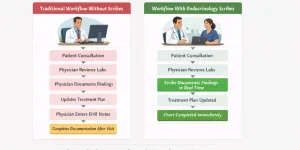
The workflow on the right demonstrates how endocrinology scribes streamline this process. During the patient visit, the scribe records the physician’s findings, treatment decisions, and clinical observations directly into the EHR in real time. This allows the physician to focus on evaluating the patient, discussing treatment options, and making medical decisions without being distracted by documentation tasks.
By completing charting during the visit, scribes help ensure that medical records are accurate, organized, and available immediately after the appointment. This improved workflow can enhance efficiency, reduce administrative burden, and allow endocrinologists to spend more time providing personalized care to patients with complex hormonal conditions.
How Endocrinology Scribes Improve Clinical Workflow
Medical scribes contribute to efficiency in several important ways. Their support allows endocrinologists to focus on diagnosing and managing complex hormonal conditions while ensuring documentation is completed accurately.
Real-Time Documentation
Scribes document patient visits as they happen. This eliminates the need for physicians to complete charts after appointments, significantly reducing administrative workload.
Better Organization of Laboratory Data
Endocrinology relies heavily on lab testing. Scribes ensure that results such as thyroid panels, insulin levels, and metabolic markers are properly recorded and organized in the patient chart.
Improved Treatment Documentation
Medication adjustments and treatment recommendations must be clearly documented to ensure continuity of care. Scribes help record these changes accurately within the EHR .
Reduced Administrative Burden
By handling documentation tasks, endocrinology scribes free physicians from time-consuming data entry. This allows doctors to see more patients while maintaining high-quality charting standards.
Impact on Physician Efficiency
Improving documentation efficiency can significantly affect physician productivity. According to research from the American Medical Association, physician burnout affects nearly 50% of clinicians, with administrative tasks and documentation workload being among the primary causes.
When endocrinology scribes manage documentation responsibilities, physicians experience fewer administrative interruptions during patient visits. This improves concentration, reduces fatigue, and enhances the quality of patient interactions.
Additionally, faster documentation completion helps clinics maintain efficient schedules and reduce delays between appointments.
Operational Advantages for Endocrinology Practices
Healthcare organizations implementing scribe programs often experience improvements across multiple operational areas.
| Practice Area | Documentation Challenge | How Endocrinology Scribes Help |
|---|---|---|
| Diabetes Management | Tracking glucose trends and medication changes | Records insulin adjustments and monitoring data |
| Thyroid Disorder Care | Frequent lab review and follow-up notes | Documents hormone test results and physician interpretation |
| Hormone Therapy Monitoring | Complex dosage adjustments | Ensures treatment plans and medication updates are recorded |
| Chronic Disease Management | Long-term patient history documentation | Maintains detailed encounter notes across multiple visits |
| Specialist Coordination | Communication gaps between providers | Ensures accurate documentation for care coordination |
Enhancing the Patient Experience
Patients benefit when physicians can focus entirely on their concerns instead of typing into a computer screen. Endocrinology visits often involve detailed conversations about lifestyle changes, medication adherence, and long-term disease management.
When scribes handle documentation tasks, endocrinologists can maintain eye contact, listen attentively, and provide more personalized guidance. This improved communication strengthens trust and encourages patients to follow treatment recommendations.
Supporting Long-Term Endocrine Care
Many endocrine disorders require continuous monitoring over years or even decades. Accurate records allow physicians to evaluate treatment effectiveness and adjust therapies based on historical data.
Endocrinology scribes ensure that patient charts contain comprehensive, well-organized documentation. These detailed records support better clinical decision-making and help healthcare providers maintain continuity of care.
Conclusion
Endocrinology practices require precise and detailed documentation to manage complex hormonal conditions effectively. However, growing EHR requirements can place a heavy administrative burden on physicians.
By providing real-time documentation support, endocrinology scribes help streamline workflows, improve chart accuracy, and reduce physician workload. Their contributions allow endocrinologists to focus on patient care while ensuring that clinical records remain thorough and compliant.
As healthcare systems continue to prioritize efficiency and high-quality documentation, the role of specialized medical scribes will become increasingly important in endocrinology practices.