

Accurate documentation plays a crucial role in nephrology clinics, where physicians manage complex kidney-related conditions such as chronic kidney disease (CKD), hypertension, electrolyte imbalances, and dialysis care. These cases require detailed clinical records, lab interpretations, medication adjustments, and long-term care plans. However, nephrologists often spend a significant portion of their time documenting patient encounters in electronic health records (EHRs), which can reduce the time available for direct patient care. This is where medical scribes in nephrology clinics make a significant impact.
Medical scribes assist physicians by documenting patient visits in real time, ensuring that all relevant medical information is recorded accurately and efficiently. In many specialty clinics, including nephrology practices, outpatient scribes help physicians capture detailed notes during consultations, allowing providers to focus fully on patient interaction rather than administrative tasks.
The Importance of Accurate Documentation in Nephrology
Nephrology involves the management of chronic and complex conditions that require ongoing monitoring and precise documentation. Physicians must record patient histories, lab results, medication changes, dialysis treatment plans, and follow-up recommendations. Even minor documentation errors can lead to treatment delays, incorrect billing, or compliance issues.
Accurate records also help maintain continuity of care. Nephrology patients often require long-term treatment, and multiple healthcare providers may be involved in their care. Clear and detailed documentation ensures that every member of the care team understands the patient’s condition and treatment plan.
How Medical Scribes Improve Documentation Accuracy
Medical scribes play a key role in improving documentation accuracy in nephrology clinics by supporting physicians during patient encounters. They record patient histories, physical exam findings, laboratory interpretations, and treatment plans directly into the EHR while the physician interacts with the patient.
By documenting information in real time, scribes reduce the risk of missing details or relying on memory after the visit. This leads to more accurate and complete medical records and improve EHR efficiency.
Research shows that physicians can spend nearly two hours on EHR and documentation tasks for every hour of patient care, highlighting the administrative burden placed on healthcare providers. Medical scribes help reduce this burden while improving documentation quality.
Real-Time Documentation During Patient Visits
One of the most valuable contributions of medical scribes in nephrology clinics is real-time documentation. During a consultation, nephrologists often review lab values such as creatinine levels, glomerular filtration rate (GFR), and electrolyte panels. Capturing these details accurately is essential for clinical decision-making.
A medical scribe documents these findings while the physician discusses them with the patient. This ensures that lab interpretations, medication adjustments, and treatment plans are recorded immediately and correctly.
Real-time documentation also allows physicians to complete most of their notes before the patient leaves the clinic, significantly reducing after-hours charting.
Reducing Physician Burnout
Documentation overload is one of the major contributors to physician burnout. Nephrologists frequently manage high patient volumes and complex medical cases, which increases the time required for documentation.
Studies suggest that medical scribes can reduce physician documentation time by up to 30%, allowing providers to spend more time focusing on patient care rather than administrative work.
By assisting with documentation tasks, scribes help physicians maintain a more manageable workload and improve work-life balance.
Supporting Detailed Clinical Notes
Nephrology requires detailed documentation because treatment decisions often depend on small changes in lab values or patient symptoms. Medical scribes help capture:
- Patient medical history and symptoms
- Lab results and diagnostic interpretations
- Dialysis treatment notes
- Medication changes and dosage adjustments
- Follow-up care plans
Accurate clinical notes help physicians track disease progression and evaluate treatment effectiveness over time.
Healthcare organizations that utilize scribes often notice improved documentation quality and efficiency. Many clinics have also reported better patient throughput when physicians receive documentation support. You can read more about how scribes support clinical workflow in busy clinics.
Improved Compliance and Billing Accuracy
Accurate documentation is essential not only for patient care but also for compliance and billing purposes. Nephrology clinics must meet strict regulatory and documentation standards, especially when managing chronic conditions and dialysis services.
Medical scribes ensure that physician notes include all required details for coding and billing, which reduces the risk of claim denials or compliance issues. Proper documentation also supports accurate reimbursement for the services provided.
For healthcare organizations managing multiple specialties, using trained scribes for different clinical environments can be beneficial. Specialty-trained scribes understand the unique documentation requirements of each field.
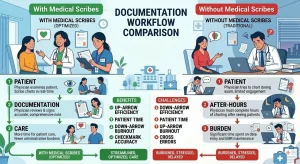
Documentation Workflow With and Without Scribes
In a traditional workflow without scribes, physicians must review patient history, conduct consultations, and then spend additional time documenting notes and completing charts after clinic hours. This process often increases administrative workload and contributes to physician fatigue.
In contrast, when medical scribes in nephrology clinics assist during patient visits, documentation is completed in real time. While the physician focuses on examining the patient and discussing treatment plans, the scribe records clinical details directly into the EHR. As a result, physicians can review and sign notes during the visit, reducing after-hours charting and improving overall documentation accuracy and efficiency.
Enhancing Patient Interaction
When nephrologists are not focused on typing notes during patient visits, they can devote more attention to patient communication. This leads to more meaningful conversations about treatment plans, lifestyle changes, and medication adherence.
Improved patient engagement is particularly important in nephrology, where patients often manage chronic conditions that require ongoing care and monitoring. Scribes allow physicians to maintain eye contact and actively listen to patients without worrying about documentation tasks.
Supporting Long-Term Patient Care
Many nephrology patients require long-term monitoring and follow-up visits. Accurate and detailed documentation helps physicians track patient progress over time and adjust treatment plans accordingly.
Medical scribes ensure that each visit is properly documented, including changes in lab results, symptoms, or medications. This information helps physicians identify patterns and make informed decisions about patient care.
The Future of Medical Scribes in Nephrology Clinics
As healthcare documentation requirements continue to grow, the demand for medical scribes in specialty clinics is expected to increase. Nephrology practices in particular benefit from the support of trained scribes who understand complex clinical terminology and documentation standards.
The role of medical scribes in nephrology clinics will likely continue evolving as healthcare technology advances. Scribes may work alongside physicians in both in-person and virtual settings, helping maintain accurate patient records while improving clinical workflow.
Conclusion
Accurate documentation is essential for delivering high-quality nephrology care. From recording detailed lab interpretations to documenting long-term treatment plans, nephrologists rely heavily on precise medical records.
Medical scribes play a critical role in improving documentation accuracy by capturing patient information in real time, reducing physician workload, and supporting compliance with clinical documentation standards.
By integrating medical scribes in nephrology clinics, healthcare providers can enhance documentation quality, improve operational efficiency, and allow physicians to focus more on what matters most—providing exceptional patient care.