Dermatology clinics across the country are experiencing unprecedented growth in patient demand. From medical dermatology cases such as acne, eczema, and psoriasis to cosmetic procedures and skin cancer screenings, providers are seeing more patients than ever before. As appointment volumes increase, so does the burden of documentation. As a result, this is where Scribing for Dermatology becomes essential.
Dermatologists must balance high patient throughput with precise, compliant documentation, especially in outpatient medical scribing environments where patient volume is consistently high. In addition, each visit requires detailed history-taking, lesion descriptions, procedural notes, and coding accuracy.
Without dedicated documentation support, providers often spend hours completing charts after clinic, which ultimately contributes to inefficiencies and burnout. Integrating outpatient medical scribing services helps streamline documentation in real time, improve accuracy, and allow dermatologists to focus more fully on patient care rather than paperwork.
The Rising Demand in Dermatology Clinics
Dermatology is one of the busiest outpatient specialties. In fact, skin conditions are among the most common reasons for physician visits, and public awareness of skin cancer prevention continues to grow. At the same time, cosmetic dermatology has expanded significantly, adding procedures such as injectables, laser treatments, and chemical peels to already packed schedules.
According to workforce studies, dermatology appointment wait times in many regions exceed several weeks due to provider shortages and increasing patient volumes. Consequently, as demand rises, clinics must find ways to maintain both speed and quality of care.
Additionally, research across healthcare indicates that physicians spend nearly two hours on electronic documentation for every hour of direct patient care. Therefore, in high-volume dermatology settings, this imbalance significantly affects productivity and limits appointment availability.
Documentation Complexity in Dermatology
Dermatology documentation is uniquely detailed. For example, providers must record:
- Lesion size, color, and morphology
- Location-specific findings
- Biopsy procedures and technique
- Pathology follow-ups
- Cosmetic treatment details
- Procedure-specific consent and counseling
Even minor omissions can affect coding accuracy or reimbursement. Moreover, thorough charting is essential not only for compliance but also for continuity of care, especially when monitoring suspicious lesions or chronic skin conditions over time.
Because of this complexity, Scribing for Dermatology becomes particularly valuable in busy clinic environments.
How Scribing for Dermatology Improves Efficiency
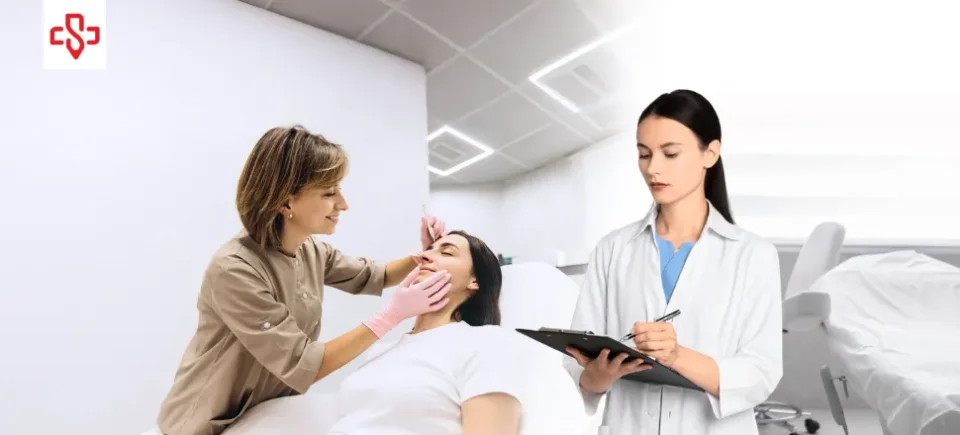
Medical scribes assist dermatologists by documenting patient encounters in real time. During consultations and procedures, scribes capture key findings directly into the electronic health record (EHR), allowing providers to remain fully engaged with patients. As a result, attention remains focused on diagnosis and treatment rather than data entry.
Live documentation models have proven especially effective in specialty practices. For instance, for a closer look at how live scribing supports multiple specialties, see this brief overview of live medical scribes.
When documentation is completed during the visit, providers can move efficiently to the next patient without accumulating unfinished notes. Consequently, daily clinic flow improves.
Reducing Physician Burnout in Dermatology
Burnout remains a serious issue across outpatient medicine. Over time, long clinic days followed by hours of charting can erode work-life balance and job satisfaction.
Studies show that documentation burden is one of the leading contributors to physician stress. For this reason, clinics that integrate scribes often report significant reductions in after-hours charting time. The impact of outpatient documentation support is further discussed in this summary of reducing physician burnout.
By adopting Scribing for Dermatology, clinics can protect provider well-being while maintaining high productivity.
Enhancing Patient Throughput Without Sacrificing Quality
High patient demand requires efficient scheduling and minimal delays. To address this challenge, scribes contribute directly to smoother clinic flow by ensuring charts are complete before the provider moves to the next appointment.
| Clinic Challenge | Impact Without Scribes | Impact With Scribing for Dermatology |
|---|---|---|
| High Patient Volume | Delayed notes and extended clinic hours | Real-time documentation and faster transitions |
| Procedure Documentation | Incomplete or rushed entries | Accurate, detailed procedural notes |
| Complex Coding | Risk of undercoding or denials | Comprehensive documentation supporting compliance |
| Provider Burnout | After-hours charting stress | Improved work-life balance |
In many specialty practices, the addition of scribes has been associated with productivity increases of up to 10–20%, depending on workflow structure and patient mix. As a result, clinics can see more patients without sacrificing documentation quality.
Supporting Cosmetic and Procedural Dermatology
Cosmetic dermatology introduces additional documentation requirements, including detailed consent forms, product tracking, and follow-up instructions. Therefore, scribes ensure that every step of the procedure is accurately recorded.
Specialty-focused live documentation continues to expand across fields. In this context, this broader trend is explored in this short overview of specialty medicine and live scribes.
By integrating Scribing for Dermatology, cosmetic practices can maintain efficiency while preserving a premium patient experience.
Strengthening Compliance and Coding Accuracy
Dermatology billing often depends on precise documentation of lesion characteristics, biopsy techniques, and medical decision-making complexity. Accordingly, accurate coding protects revenue and reduces audit risk.
Understanding the full scope of documentation support is important for practice leaders. For example, this concise guide to medical scribe duties outlines how scribes contribute to compliance and workflow efficiency.
With trained scribes handling documentation details, dermatologists can focus on diagnosis and treatment without worrying about missing critical chart elements.
Improving Patient Experience
Patients value attentive, focused care. When providers are not dividing attention between a screen and the patient, communication improves. As a result, eye contact, education, and shared decision-making become easier.
For cosmetic consultations especially, strong patient-provider rapport influences satisfaction and retention. In turn, Scribing for Dermatology supports this interaction by removing the distraction of real-time typing.
Preparing for Continued Growth
The demand for dermatology services shows no signs of slowing. Indeed, aging populations, increased skin cancer awareness, and the expansion of aesthetic medicine all contribute to rising appointment volumes.
To remain competitive and sustainable, dermatology clinics must adopt workflow solutions that balance efficiency with quality. Ultimately, scribes provide a scalable approach to managing documentation demands without compromising care standards.
Conclusion
Dermatology clinics face growing patient demand, detailed procedural documentation requirements, and increasing administrative pressures. Without structured support, these factors can strain providers and slow clinic operations.
Scribing for Dermatology offers a strategic solution. By improving documentation accuracy, enhancing clinic flow, reducing burnout, and strengthening compliance, medical scribes enable dermatology practices to handle higher patient volumes while maintaining exceptional standards of care.
As patient demand continues to grow, integrating specialized scribing support is no longer optional—it is becoming essential for modern dermatology clinics seeking long-term operational success.