In the age of AI and automation, electronic health records (EHRs) power modern care. Yet even the best EHR platforms still depend on one thing technology cannot replace: human judgment. Providers spend hours inside the EHR entering histories, updating orders, reconciling medications, and completing documentation requirements. When time is tight, and tools feel fragmented, one question becomes unavoidable: Can technology alone preserve accuracy in clinical documentation? The answer is no. Virtual scribe services add the safety, context, and clarity that automation tools often miss. At Scribe.ology, we pair secure workflows with trained humans who listen carefully, understand clinical intent, and document with precision.
The promise and pitfalls of EHR automation
EHRs launched with a clear goal: reduce paperwork, cut duplication, and streamline care delivery. Many systems now include medical scribe software, templates, and AI-assisted documentation tools that speed up routine tasks.
But technology still has blind spots. Common risks include:
- Voice-to-text tools mishear accents, soft speech, or background noise
- Auto-populated templates create generic notes or inaccurate carry-forward content
- AI struggles with ambiguity and nuanced clinical language
- Busy providers skip details to keep visits moving
Small gaps can turn into costly documentation errors. Those errors can affect diagnosis, billing, quality reporting, and patient safety.
EHR-related documentation mistakes often stem from context gaps—subtle details that machines fail to understand but trained listeners catch.
Why virtual scribe services improve documentation quality
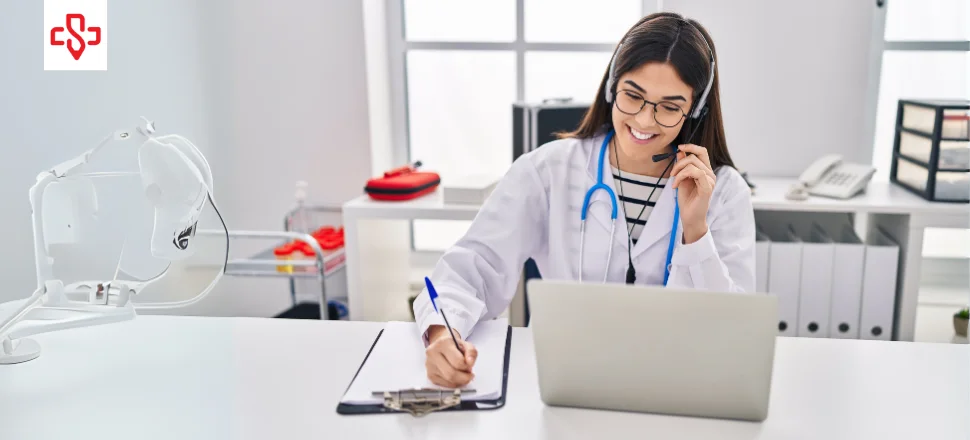
Virtual scribe services place a trained scribe alongside the provider remotely and document in real time. Instead of simply recording words, a scribe captures meaning and clinical structure.
Teams using virtual scribe services typically:
- Listen to patient–provider interactions in real time
- Document the HPI, ROS, exam elements, and plan as the visit unfolds
- Format notes to match provider preferences and specialty standards
- Clarify unclear statements through approved workflows
Automation tools transcribe. Scribes interpret.
That human discernment matters in fast-paced specialties such as emergency medicine, orthopedics, and primary care, where visits move quickly, and details drive decision-making.
Virtual scribe services reduce documentation errors through human oversight
Virtual scribe services reduce documentation errors by improving completeness and consistency.
When care teams use virtual scribe services, they often see:
- Fewer charting omissions
- Clearer clinical narratives that support medical decision-making
- More consistent documentation across visits and providers
Scribes also catch gaps that software can miss, such as:
- Missing ROS elements
- Incomplete medication lists
- Contradictions in patient history
- Documentation gaps that weaken coding support
These issues create risk. They can trigger denials, invite audit scrutiny, and undermine patient safety.
Scribes also strengthen compliance. They help capture time-based services, consent discussions, and documentation components that support accurate coding.
Better notes support better care
High-quality notes do more than close charts. They support safer, faster care.
Well-structured documentation helps teams:
- Review patient history faster
- Coordinate care across providers and departments
- Reduce rework caused by unclear charting
- Improve follow-up accuracy
Many providers report that a strong scribe partnership improves clinical focus. A clear note reduces cognitive load during a busy day.
Virtual Scribes – The human touch that software cannot replace
Software processes words. Humans understand tone, emphasis, and uncertainty.
A patient might say, “I’ve had a bit of pain for a while.” A trained listener can recognize patterns that suggest chronic or worsening symptoms and document the nuance correctly.
A tool might label the statement as vague. A scribe can capture clinical meaning in the provider’s voice while keeping the note compliant and useful.
That ability—active listening, contextual understanding, and accurate documentation—makes virtual scribes essential in modern EHR workflows.
How Scribe.ology delivers excellent virtual scribe support
Scribe.ology trains virtual scribes to support real clinical workflows, not just note-taking.
Our program emphasizes:
- Specialty-specific terminology and visit structure
- EHR fluency across leading platforms
- HIPAA-compliant documentation workflows
- Provider-aligned formatting and preferences
- Ongoing quality assurance and improvement
We use a structured QA process that includes provider feedback, chart reviews, and continuing education to maintain documentation standards over time.
Virtual scribe services deliver real operational results
Telehealth and hybrid care models have expanded quickly. Many organizations now rely on remote scribing to manage documentation volume and protect provider time.
Virtual scribe support helps teams:
- Improve EHR documentation hygiene
- Reduce after-hours charting
- Strengthen documentation that supports billing accuracy
- Scale coverage without disrupting operations
Whether you support a single provider or a multispecialty group, virtual scribe services offer flexibility and personalization that prebuilt templates cannot match.
EHR efficiency needs human clarity
Technology will keep evolving in healthcare. But advanced systems do not remove the need for skilled, observant humans.
When you integrate virtual scribe services into your workflow, you combine the speed of digital tools with human context and accountability.
Want to reduce documentation errors and improve note quality? Contact Scribe.ology to learn how our virtual scribe services support accurate, compliant, and efficient clinical documentation.