Timing drives clinical documentation. Providers who document in real time produce more accurate notes and experience far less burnout than those who wait until the end of the day. Remote medical scribes transform this process. They capture every detail during the encounter, so clinicians focus completely on the patient — not the keyboard.
At Scribe.ology, we witness daily how real-time scribing reduces errors, lightens cognitive load, and delivers safer, more informed care.
End-of-Day Documentation Creates Serious Risks
Without scribe support, many providers follow this routine: they see 20–25 patients during the day, then spend hours later recalling details to finish notes. This workflow looks manageable at first, but it introduces major risks:
Real-Time Remote Medical Scribe Support: Safer Care, No Delays
- Providers rely on memory after hours — they easily omit key symptoms, timelines, or exact patient quotes.
- Cognitive fatigue at day’s end lowers clinical precision and increases mistakes.
- Care team members work from outdated or incomplete notes — they make suboptimal decisions as a result.
- Auditors flag incomplete or vague notes during insurance or compliance reviews — this raises denial risk.
These issues compromise documentation quality, patient safety, and provider well-being.
Real-Time Notes Deliver Accuracy, Speed, and Trust
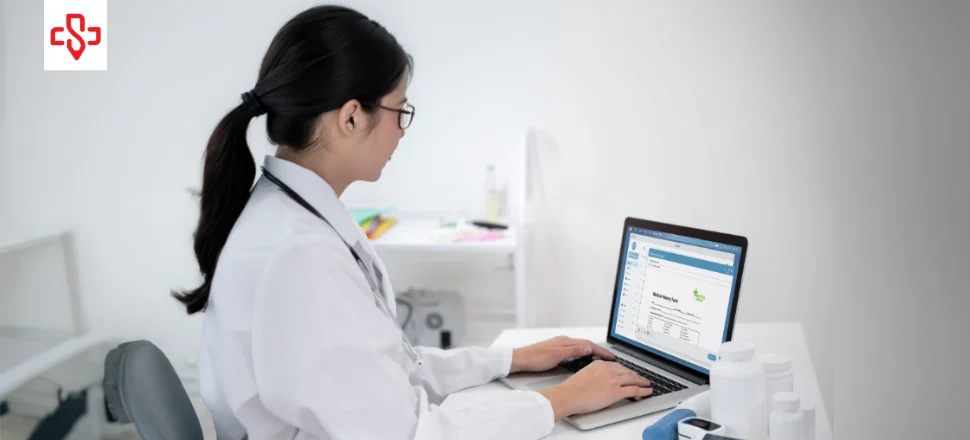
A remote scribe joins the visit securely and updates the EHR as the encounter unfolds. The provider focuses entirely on the patient while the scribe listens, transcribes, and organizes information in real time.
This approach brings powerful advantages:
- The scribe captures every detail exactly as it happens — no memory gaps occur.
- Providers avoid juggling note-taking and clinical reasoning — mental strain drops sharply.
- Care team members access fresh, complete notes immediately — communication improves instantly.
- Providers finish the day on time — they preserve documentation quality without sacrificing personal time.
Patient Safety Starts with Clear, Immediate Notes
Safe care requires clarity. Delayed charting distorts important details. A patient’s mention of “chest discomfort” may turn into simply “pain” in a rushed evening note — clinicians miss the nuance that could prompt a cardiac workup.
Remote medical scribe support eliminates this risk. The scribe listens attentively, structures the information correctly, and records vital signs, medication lists, symptoms, and plans accurately from the start. Timely notes help providers:
- Reduce medical errors
- Improve diagnostic precision
- Strengthen continuity of care across teams and settings
What Remote Scribes Bring to Every Encounter
Remote medical scribes actively support clinicians by:
- Interpreting clinical conversations in real time
- Spotting and prompting missing elements (ROS, physical exam, counseling)
- Aligning notes with payer guidelines and compliance standards
- Supporting both hospital-based and outpatient workflows
This human-in-the-loop approach outperforms templates or auto-complete tools. Scribe.ology scribes hold HIPAA certification, complete professional training, and specialize in fields from primary care to emergency medicine — they deliver secure, reliable support every time.
Remote Scribes vs. In-Person Hospital Scribes
In-person hospital scribes have served acute care well for years, but remote scribes now lead for many practices. Here’s why:
- They scale across time zones and locations effortlessly.
- They eliminate the need for extra physical workspace.
- They provide 24/7 coverage — perfect for telehealth, overnight shifts, and rural sites.
- They connect providers with the best-fit scribes — geography no longer limits talent.
Remote scribes frequently match or exceed the quality of in-person support while offering greater flexibility and reach.
The Scribe.ology Difference
Scribe.ology leads in remote scribe solutions because we:
- Match scribes to providers based on specialty and workflow style
- Ensure mastery of major EHR platforms (Epic, Cerner, Athenahealth, and more)
- Maintain continuous quality assurance and provider feedback loops
- Offer both real-time and asynchronous options to fit any practice need
Whether you run a solo office or a large health system, our secure, real-time remote scribe solutions adapt to your exact requirements.
Real-Time Documentation Defines the Future
Real-time documentation powered by skilled remote scribes is no longer optional — it’s essential. Rising patient loads, shrinking margins, and growing quality demands make delayed charting unsustainable. Real-time scribing prevents documentation errors and helps prevent clinical errors. That leads to safer care, better outcomes, and healthier workdays for everyone on the team.
Ready to eliminate documentation delays and strengthen patient safety? Consult with Scribe.ology today. See how our secure, real-time remote scribe solutions can transform your practice.