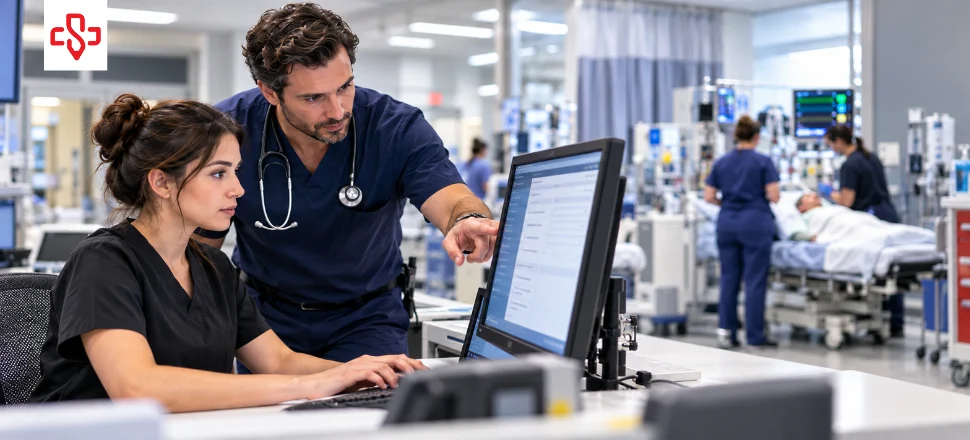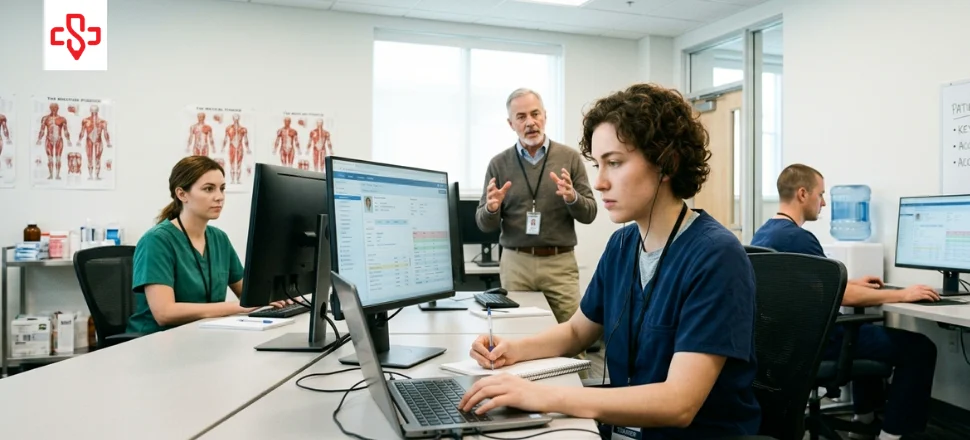

Emergency departments operate in fast-paced, high-stakes environments where timely documentation, accurate records, and efficient workflows are essential. As a result, the role of the emergency medicine scribe has become a pivotal support system. Emergency medicine scribes enable clinicians to focus on patient care while ensuring electronic health records (EHRs) are precise, complete, and up to date.
Supporting Clinicians Amid High Patient Volumes
Emergency physicians manage rising patient volumes, complex cases, and extensive documentation demands every shift. According to studies, clinicians spend up to 50% of their shift on EHR-related tasks, which significantly limits direct patient interaction. Emergency medicine scribes directly address this challenge by capturing real-time patient information, updating charts, and documenting procedures accurately as care occurs.
Consequently, when scribes integrate into the care team, emergency departments improve both efficiency and patient safety. This support reduces documentation-related errors and allows physicians to concentrate on rapid diagnosis and clinical decision-making. For a deeper look at how scribes manage complex medical information, see the article on capturing complex clinical data.
Enhancing Patient Interaction and Satisfaction
When physicians no longer juggle constant data entry, they can spend more time engaging with patients. As a result, clinicians explain diagnoses more clearly, answer questions thoroughly, and address patient concerns with greater focus. Research consistently shows higher patient satisfaction when providers prioritize face-to-face interaction over charting.
In fact, one study found that time spent facing patients increased by 57%, while time spent facing the computer decreased by 27% after scribes were implemented in primary care settings. Additionally, patients spent a higher proportion of their visit time in direct clinician engagement.
Similarly, during mental health emergencies, accurate and timely documentation remains critical. In these situations, scribes actively assist providers by recording behavioral assessments, treatment plans, and follow-up instructions. This process is outlined in detail in the mental healthcare scribe guide.
Increasing Workflow Efficiency in Emergency Departments
Emergency medicine scribes also streamline departmental workflows by completing documentation in real time. As a result, providers can place orders, request labs, and initiate discharge planning without delay. This efficiency reduces bottlenecks and ensures that care teams access accurate patient records immediately.
Moreover, improved workflows lead to shorter patient wait times, faster discharges, and stronger overall department performance.
Top Ways Scribes Improve Physician Productivity
The impact of scribes on physician productivity is well documented. By offloading administrative responsibilities, scribes allow physicians to focus on high-value clinical tasks rather than clerical work. A comprehensive breakdown of these benefits appears in this article on improving physician productivity.
Comparing Scribing Models: In-Person vs Remote
Emergency departments can choose between in-person and remote scribe models. In many cases, in-person scribes integrate more seamlessly into workflows because they observe patient encounters directly. This presence often improves documentation accuracy and communication with clinicians. A detailed comparison appears in the in-person vs. remote scribe preferences article.
Ensuring Accuracy and Compliance
High-quality documentation supports both clinical care and regulatory compliance. Medical scribes actively follow standardized documentation protocols, which reduce errors, limit claim denials, and prepare emergency departments for audits. Ongoing quality assurance further strengthens documentation accuracy, as outlined in this guide on quality assurance in medical scribing.
Table: Impact of Emergency Medicine Scribes
| Impact Area | Without Scribes | With Emergency Medicine Scribes |
|---|---|---|
| Physician Documentation Time | High after-hours charting | Real-time charting during patient encounters |
| Direct Patient Engagement | Limited due to administrative burden | Increased 15–20% per shift |
| Patient Throughput | Slower; delays in orders and discharge | Faster, streamlined orders and discharge |
| Compliance and Billing | Variable accuracy; higher risk of denials | Standardized, accurate, audit-ready documentation |
Long-Term ROI and Workforce Benefits
Beyond immediate efficiency gains, the role of the emergency medicine scribe delivers long-term value. Specifically, scribes help reduce physician burnout, improve staff retention, and strengthen financial performance. By shifting focus away from clerical work, hospitals lower turnover costs and maintain consistent, high-quality patient care.
Emergency departments planning to scale scribe programs can explore long-term operational advantages in this article on the hidden ROI of scribe programs.
Conclusion
The role of emergency medicine scribe is indispensable in modern healthcare. By improving documentation accuracy, enhancing patient engagement, streamlining workflows, and supporting compliance, scribes deliver measurable value to both clinicians and healthcare organizations. As a result, departments that implement scribe programs achieve higher efficiency, reduced burnout, and better patient outcomes.
Looking to implement or expand scribe support in your emergency department? Scribe.ology offers customized emergency medicine scribe solutions that enhance physician productivity, reduce administrative burden, and improve patient care. With expert training, compliance oversight, and seamless workflow integration, Scribeology helps hospitals achieve lasting clinical and operational results.