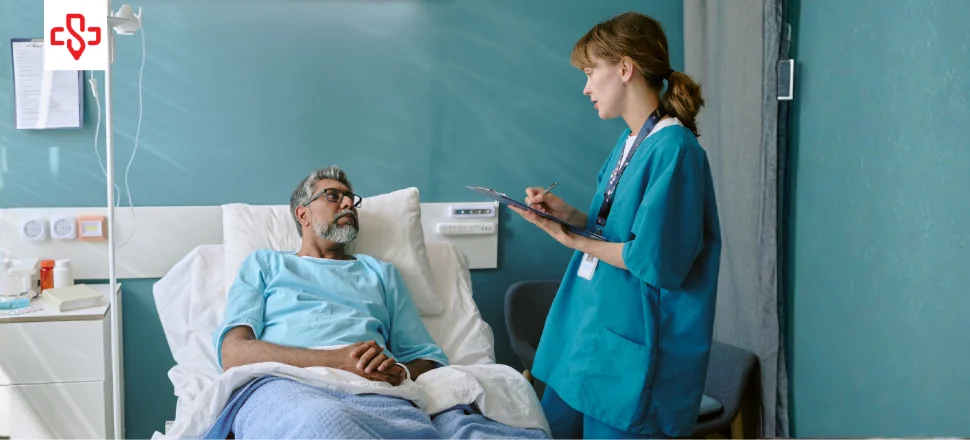

Emergency departments (EDs) operate in one of the most demanding environments in healthcare. Physicians must make rapid decisions, manage high patient volumes, and document every detail accurately—all under intense time pressure. In this setting, documentation inefficiencies quickly lead to workflow bottlenecks, clinician burnout, and increased risk of errors. That’s where clinical documentation services powered by ER scribe solutions make a transformative difference.
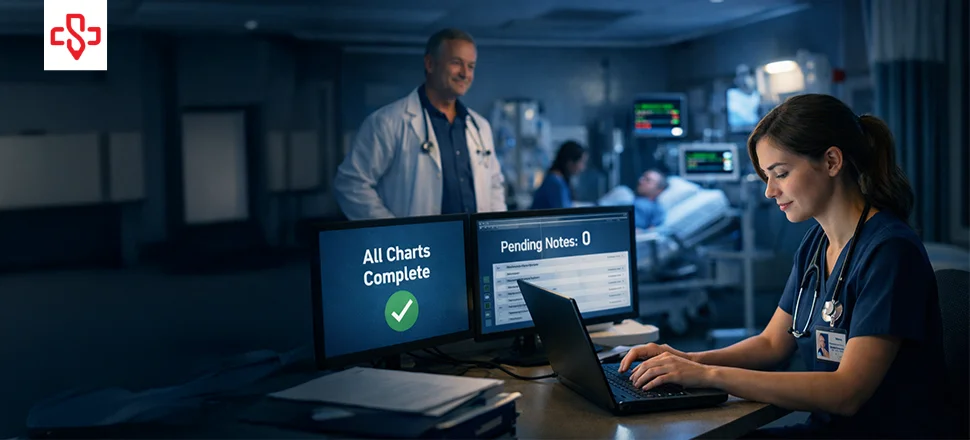
The Documentation Crisis in Emergency Departments
Emergency medicine is fast, chaotic, and high-stakes. Providers often see 2–4 patients per hour while juggling interruptions, consultations, procedures, and handoffs. Most documentation ends up delayed until the end of the shift — or worse, completed after hours.
“Studies show emergency physicians spend nearly half their shift on EHR and documentation tasks, contributing heavily to burnout and reduced patient-facing time.”
— Journal of the American College of Emergency Physicians (2024)
These delays create:
- Incomplete or rushed notes → coding inaccuracies & revenue leakage
- Backlogs at shift change → poor handoffs & safety risks
- Extended charting time → increased burnout & turnover
- Patient wait times increase → lower satisfaction scores
Clinical documentation services with dedicated ER scribes solve these problems by capturing information in real time, directly at the point of care.
How ER Scribe Solutions Transforms Documentation
Scribe.ology’s ER scribe solutions place trained medical scribes (onsite or virtual) alongside emergency physicians to document patient encounters in real time. Key mechanisms include:
- Real-time charting — notes are entered as the encounter unfolds, eliminating memory gaps
- Accurate order entry & tracking — labs, imaging, and medications logged instantly
- Complete E/M capture — ensuring acuity, complexity, and MDM are fully documented for proper coding
- Discharge & handoff preparation — summaries ready before the patient leaves the department
Proven Impact on Emergency Department Metrics
Supporting High-Acuity & Night-Shift Realities
Night shifts and high-acuity cases amplify documentation challenges. Scribe.ology’s ER scribe solutions are built for these conditions:
- 24/7 coverage with night-optimized teams
- Trauma & resuscitation-trained scribes
- Hybrid onsite + virtual models for surge capacity
- Proactive handoff notes for shift changes
Compliance, Coding & Revenue Integrity
Accurate real-time documentation directly supports:
- ICD-10 & CPT coding precision
- Medical decision-making (MDM) capture
- Audit-ready records
- Reduced claim denials
Many EDs report 15–30% revenue uplift from better capture of acuity, procedures, and critical care time.
Why Scribe.ology Leads in ER Clinical Documentation Services
- Specialized emergency medicine training
- Flexible onsite + virtual scribe models
- Full HIPAA & SOC 2 compliance
- Integration with Epic, Cerner, Meditech & more
- Proven throughput & satisfaction gains
- Rapid deployment (2–4 weeks standard)
Ready to Transform Your Emergency Department?
Clinical documentation services powered by live ER scribes are no longer a luxury — they are a strategic necessity for high-performing emergency departments. Stop letting charting delays and burnout compromise care and revenue.
Schedule Your Free ED Workflow Assessment. See how Scribe.ology can cut documentation time by 40% and boost patient throughput in your emergency department.