
Every clinical encounter generates documentation. But not all documentation meets the same standard. When physicians write incomplete, vague, or inconsistent notes, the consequences extend far beyond the chart — affecting reimbursement, compliance, quality scores, and patient safety. This is where Clinical Documentation Improvement (CDI) becomes essential. It is also where medical scribes for CDI serve as one of the most effective tools healthcare organizations use to close the gap between what happens in the exam room and what gets recorded.
The good news is that CDI gaps are largely preventable. The challenge is not that physicians lack the clinical knowledge to document well — it is that they lack the time. A dedicated scribing service removes that constraint entirely, embedding a trained scribe into the clinical workflow so that documentation keeps pace with care, not the other way around.
What Is Clinical Documentation Improvement (CDI)?
Clinical Documentation Improvement is a structured initiative that helps healthcare organizations ensure clinical records accurately, completely, and specifically reflect the care provided to each patient.
CDI programs focus on four core outcomes:
- Accuracy — Does the documentation reflect the true clinical picture?
- Specificity — Do providers document diagnoses with enough detail to support correct coding?
- Completeness — Do records capture all relevant conditions, comorbidities, and procedures?
- Compliance — Does the documentation meet regulatory and payer requirements?
When any of these elements fail, organizations face significant downstream consequences, including claim denials, reduced reimbursement, audit risks, and distorted quality metrics that impact hospital rankings and value-based care contracts.
Why CDI Is a Growing Priority in Healthcare
The shift toward value-based care has significantly increased the importance of documentation quality. Payers — including CMS — now tie reimbursement directly to the accuracy and completeness of clinical records. Risk adjustment models, HCC coding, and quality reporting programs all rely on documentation that clearly reflects the patient’s full clinical story.
At the same time, physicians face increasing time constraints. As documentation demands grow, incomplete or rushed notes become more common. More than 22% of physicians now report spending over eight hours on the EHR outside of normal working hours — up from the previous year. For physicians seeing 25 to 30 patients daily — whether in outpatient clinics, hospital settings, or fast-paced emergency departments — maintaining the level of documentation specificity CDI programs demand is simply not realistic without additional support.
How Medical Scribes Support CDI
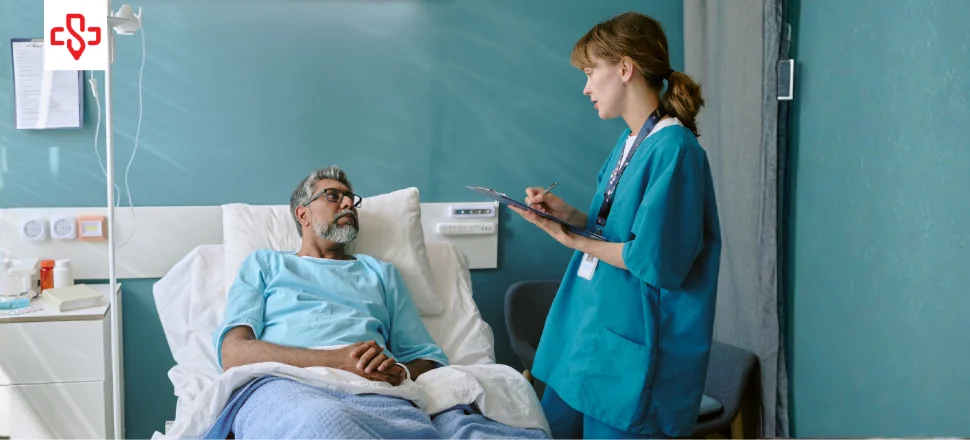
Medical scribes for CDI work alongside physicians during patient encounters and capture documentation in real time with the accuracy, specificity, and completeness CDI programs demand. This structured, real-time capture strengthens documentation quality, starting with how each SOAP note is built. Here is how scribes contribute within CDI workflows.
1. Real-Time, Complete Capture
Physicians often lose details when they document from memory after a shift. A scribe present during the encounter captures the complete clinical picture as it unfolds — including the chief complaint, history, exam findings, clinical reasoning, and treatment plan. This approach eliminates the need to reconstruct information later.
2. Diagnosis Specificity
Trained scribes understand clinical terminology and documentation standards. They actively identify when a diagnosis lacks the specificity required for accurate ICD-10 coding — such as differentiating between Type 1 and Type 2 diabetes or identifying whether heart failure is acute or chronic. This level of detail strengthens CDI outcomes.
3. Comorbidity and Secondary Diagnosis Capture
Physicians often address comorbid conditions during visits but may not always document them fully. Scribes ensure that providers capture these secondary diagnoses appropriately, which supports more accurate risk adjustment and reimbursement.
4. Reducing Physician Query Burden
Traditional CDI programs often rely on retrospective queries, where specialists request clarification from physicians after documentation is complete. Scribes reduce this burden by capturing accurate and complete information during the encounter, allowing physicians to finalize notes correctly the first time.
5. Supporting Cleaner Claims and Reduced Denials
Incomplete documentation remains one of the leading causes of claim denials. Scribes help prevent this issue by ensuring that notes remain complete, specific, and properly structured before they reach the billing team. This results in cleaner claims, fewer denials, and stronger revenue cycle performance.
CDI Is Not Just a Billing Issue
CDI extends beyond revenue. Accurate and complete documentation plays a critical role in patient safety. Care team members depend on documentation to understand each patient’s full clinical picture. When gaps exist, providers risk missing conditions, overlooking drug interactions, or making less-informed treatment decisions.
Documentation quality directly influences patient outcomes. Incomplete or rushed notes disrupt continuity of care, not just billing processes. This connection appears clearly in performance data: hospitals using dedicated scribes consistently report improved HCAHPS scores, as stronger documentation supports better coordination and more responsive care delivery.
Is Your Practice Losing Ground on CDI?
If your organization experiences any of the following challenges, documentation gaps may already affect performance:
- Higher than expected claim denial rates
- Frequent CDI queries sent to physicians
- Quality scores that fail to reflect actual care delivery
- Physicians spending excessive time on after-hours charting
- Inconsistent documentation quality across providers or shifts
A trained medical scribe program, built with CDI principles in mind, addresses each of these at the point of care — before problems reach the billing team, the auditor, or the quality dashboard. The impact goes further too, with scribes helping busy clinics see more patients without adding to physician burnout.
The Bottom Line
Clinical Documentation Improvement represents one of the highest-impact investments healthcare organizations can make. Medical scribes provide a practical and effective way to strengthen CDI by capturing complete, specific, and compliant documentation in real time. They help ensure that records accurately reflect the care delivered.
At Scribe.ology, our scribes focus not only on documentation but on documentation quality. Whether you need support in the emergency department, hospital, or outpatient setting, we can show you how our scribing services improve CDI outcomes while reducing physician burden. Get a complimentary consultation today.