
Protecting patient health information (PHI) remains one of the most critical responsibilities in modern healthcare. As electronic health records (EHRs) grow more complex and interconnected, and HIPAA regulations continue to tighten with increased enforcement and penalties, clinicians face mounting pressure to deliver exceptional care while producing secure, accurate, and timely documentation. Scribes for clinical documentation have emerged as a strategic solution—trained professionals who work in real time during patient encounters to securely capture every detail, reduce human error, and allow providers to remain fully present with patients rather than be distracted by screens.
Live scribes operate at the point of care, documenting conversations, exams, orders, and clinical reasoning as they occur. This immediate, human-driven approach dramatically strengthens PHI protection, minimizes compliance risks, and supports higher-quality care. Below, we dive deeper into the challenges, benefits, secure practices, and strategic value of using scribes for clinical documentation in today’s demanding healthcare environment.
Documentation Security Challenges in Modern Healthcare
Emergency departments, outpatient clinics, specialty practices, and hospitals all face escalating documentation complexity. Recent data shows that many providers still spend more than 50% of their workday interacting with EHRs—often resulting in documentation backlogs, rushed entries, and increased risk of errors or omissions.
Traditional documentation methods—whether handwritten notes, delayed transcription, or self-entry by busy clinicians—can expose PHI through:
- Prolonged periods when incomplete records remain accessible
- Weak or inconsistent access controls during multi-user workflows
- After-hours corrections that occur outside supervised settings
- Manual transcription processes are prone to mishearing or misinterpretation
Many organizations now rely on medical scribe outsourcing to manage high documentation volumes safely. Scribes for clinical documentation eliminate many of these vulnerabilities by capturing data in real time—shortening the window during which incomplete or unsecured records exist and virtually eliminating after-hours charting, one of the most common sources of inadvertent PHI breaches.
How Scribes for Clinical Documentation Support Secure PHI Handling
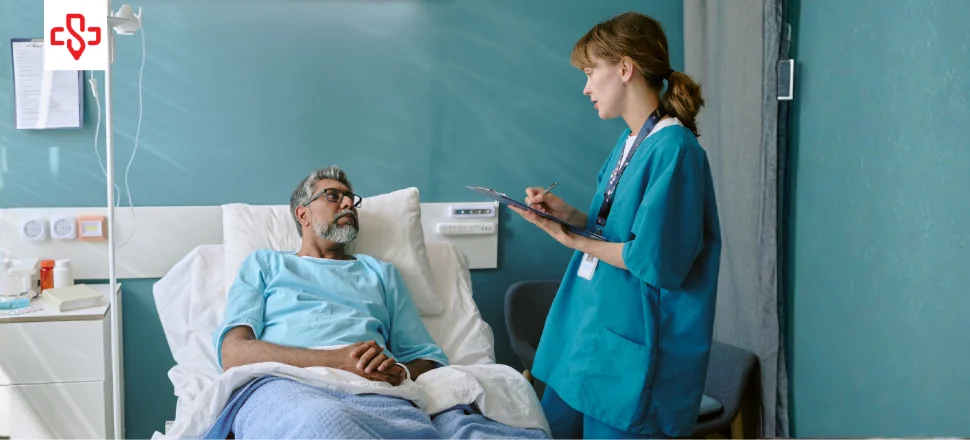
Live scribes, whether physically or virtually, join providers during patient visits (depending on the model). They listen actively, observe clinical interactions, and enter detailed notes directly into the EHR with precision and immediacy. This eliminates reliance on memory or delayed recall, significantly reducing the risk of missing critical details or entering inaccurate information that could compromise PHI integrity.
Professional scribes adhere to rigorous, standardized protocols for documentation, privacy, and security at every step of the encounter. Their real-time presence also allows clinicians to maintain natural eye contact, active listening, and therapeutic rapport—without the constant distraction of typing or screen navigation. This not only protects PHI but enhances the overall quality of the patient-provider interaction. Learn more in this article: How live scribes help providers prioritize patients over paperwork.
Key Secure Documentation Practices with Scribes for Clinical Documentation
Reducing Errors and Improving Accuracy for Stronger PHI Integrity
Documentation errors remain a persistent issue across healthcare settings. Older peer-reviewed studies found errors present in nearly all reviewed records, with approximately 40% carrying potential for serious patient harm. Contemporary research and quality audits confirm that incomplete notes, transcription mistakes, and omitted clinical reasoning remain threats to patient safety and legal defensibility.
Scribes for clinical documentation address this by documenting at the point of care—capturing history of present illness (HPI), review of systems (ROS), physical exam findings, orders, assessments, and plans in real time. This immediate capture virtually eliminates transcription errors, fills potential gaps, and ensures that sensitive PHI is recorded accurately and completely from the outset. The outcome is stronger PHI protection, safer clinical decision-making, and more defensible records during audits or litigation reviews.
Security Across Remote, Hybrid, and Telehealth Models
Telehealth adoption and hybrid care models continue to expand rapidly in 2026. Scribes for clinical documentation provide secure, consistent support regardless of care delivery setting—whether in-person, virtual, or blended.
Real-time documentation ensures EHR completeness and PHI protection across platforms. Live scribes also detect subtle contextual cues—body language, tone, environmental factors, or unspoken concerns—that remote-only or AI models frequently miss. This human layer adds significant value in fast-paced, high-stakes, or hybrid environments. Read more: What live medical scribes see that remote models miss.
Enhancing Patient Experience Through Secure & Accurate Documentation
Secure, error-free records build patient trust and improve care continuity. When documentation is accurate and timely, follow-up communication is clearer, medication reconciliation is more reliable, and care transitions are smoother.
In high-acuity and high-volume environments, scribe support often leads to measurable improvements in patient satisfaction scores (including HCAHPS). Patients perceive greater physician presence, better listening, and more thorough explanations—outcomes directly tied to reduced screen time. See details: How live medical scribes improve patient satisfaction.
Reducing Clinician Burnout While Reinforcing PHI Protection
Documentation burden remains a primary driver of clinician burnout. Extended after-hours charting (“pajama time”) increases fatigue, cognitive overload, and the likelihood of errors that could compromise PHI.
Scribes for clinical documentation shift this workload in real time. Providers finish encounters with complete, accurate notes—no lingering administrative tasks. This leads to higher job satisfaction, better work-life balance, reduced turnover risk, and—most importantly—fewer rushed or incomplete entries that could expose PHI. The dual benefits of reduced burnout and stronger security make scribes a high-value investment for sustainable clinical teams.
Ensuring Compliance, Audit Readiness & Long-Term Regulatory Strength
HIPAA, Meaningful Use, MACRA, and emerging data privacy frameworks all require complete, accurate, timely, and auditable documentation. Scribes for clinical documentation deliver structured, thorough EHR entries that align with these standards.
Benefits include:
- Consistent capture of required elements for billing and quality reporting
- Reduced claim denials due to incomplete or unsupported documentation
- Stronger defensibility during audits, peer reviews, or legal inquiries
- Centralized quality assurance processes across multi-site or multi-specialty organizations
Conclusion: Scribes for Clinical Documentation – A Strategic Investment in PHI Security & Care Quality
In an era of expanding EHR complexity, stricter regulations, and rising patient expectations, protecting PHI while maintaining clinical excellence is non-negotiable. Scribes for clinical documentation provide real-time accuracy, error reduction, robust safeguards, and provider relief—delivering measurable improvements in compliance, patient safety, satisfaction, and operational efficiency.
Whether your organization operates in high-acuity emergency settings, specialty clinics, primary care, telehealth, or hybrid models, live scribes adapt seamlessly to protect PHI and elevate care delivery. Healthcare leaders seeking reliable, secure, and high-impact documentation support can partner with experts who understand both clinical and regulatory realities.
Explore the full benefits and connect with Scribeology for tailored live scribe solutions that prioritize PHI protection, compliance, and long-term results. Request a customized consultation today.