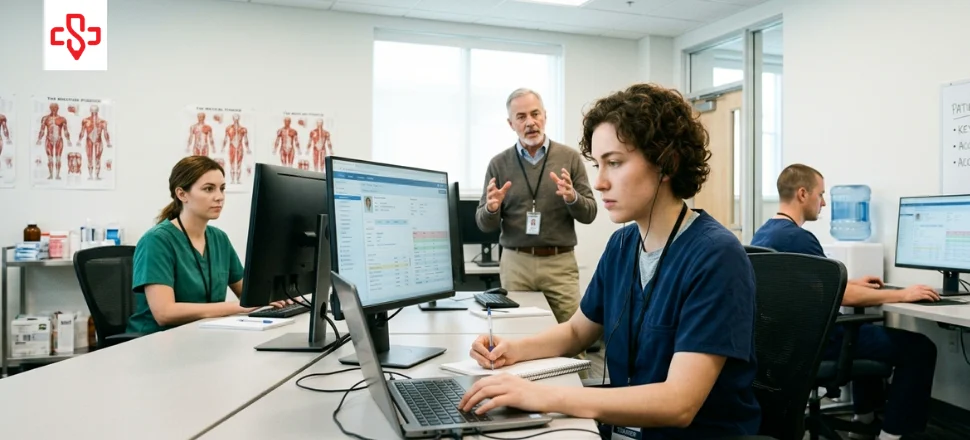

Pulmonology is one of the most documentation-intensive specialties in modern medicine. From interpreting spirometry curves to managing patients with overlapping chronic conditions, pulmonologists generate vast amounts of clinical data every day. Consequently, pulmonology scribes play a critical role in translating that data into structured, accurate, and compliant medical records while physicians stay focused on patient care.
Why Pulmonology Documentation Is Uniquely Complex
Unlike many outpatient specialties where encounters follow a predictable format, pulmonology visits often involve layered diagnostic data. For example, a single patient may present with abnormal spirometry values, a recent polysomnography report, and active medication titrations. According to a 2023 study published in the journal Chest, pulmonologists spend an average of 16 minutes per patient on EHR documentation alone. As a result, this is among the highest across all medical subspecialties. Therefore, dedicated scribes in this specialty reduce the burden by capturing clinical narratives and plan-of-care details in real time so the physician can focus on the patient.
Moreover, the complexity does not stop at the encounter level. Pulmonology documentation must satisfy payer requirements, support correct CPT and ICD-10 coding, and demonstrate medical necessity for procedures such as bronchoscopies or oxygen therapy prescriptions. Practices that want to understand how doctors benefit from medical scribes will find that pulmonology is one of the strongest use cases.
Documenting Pulmonary Function Tests
Pulmonary function tests are the diagnostic backbone of any pulmonology practice. These tests measure lung capacity, airflow, and gas exchange efficiency. Therefore, pulmonology scribes must understand how to document FEV1, FVC, FEV1/FVC ratios, DLCO values, and total lung capacity readings alongside the physician’s clinical interpretation.
However, a well-trained scribe does not simply transcribe numbers. Instead, they contextualize the data by recording pre-bronchodilator and post-bronchodilator values, noting percentage changes, and linking the results to the patient’s symptom history. This level of detail is essential for longitudinal tracking because pulmonologists rely on trend data across multiple visits to assess disease progression. In addition, the documentation must align with the clinical documentation improvement standards that health systems increasingly require.
Key PFT Metrics That Scribes Document in Pulmonary Care
| PFT Metric | What It Measures | Scribe Documentation Focus |
|---|---|---|
| FEV1 | Air volume exhaled in the first second | Record absolute value, percent predicted, and comparison to prior results |
| FVC | Total air volume exhaled during a forced breath | Note pre- and post-bronchodilator values with percentage change |
| FEV1/FVC Ratio | Proportion of lung capacity expelled in one second | Flag obstructive vs. restrictive patterns based on physician interpretation |
| DLCO | Lung ability to transfer gas from air to blood | Document adjusted values for hemoglobin and altitude when applicable |
| TLC | Total volume of air the lungs can hold | Record plethysmography vs. dilution method used and clinical correlation |
| Peak Flow | Maximum speed of expiration | Log variability over time for asthma action plan documentation |
How Pulmonology Scribes Document Sleep Studies
Sleep medicine is a growing subspecialty within pulmonology. Consequently, the documentation demands of polysomnography and home sleep apnea testing are substantial. A single overnight sleep study generates data on apnea-hypopnea index values, oxygen desaturation events, sleep architecture stages, and cardiac rhythm patterns. Therefore, trained scribes working in pulmonary medicine must translate the sleep technologist’s raw report into a clinical narrative that supports diagnosis and treatment recommendations.
Additionally, the American Academy of Sleep Medicine reports that approximately 30 million adults in the United States have obstructive sleep apnea. However, roughly 80 percent of moderate-to-severe cases remain undiagnosed. As a result, scribes help manage this growing patient volume by documenting Epworth Sleepiness Scale scores, STOP-BANG questionnaire results, and CPAP compliance data without slowing the physician down. Practices managing high volumes can also explore different types of medical scribes to find the right staffing model.
Chronic Respiratory Care and Longitudinal Documentation
Managing chronic respiratory conditions such as COPD, asthma, idiopathic pulmonary fibrosis, and bronchiectasis requires meticulous longitudinal documentation. Therefore, scribes supporting pulmonary care track medication changes, inhaler technique assessments, vaccination histories, and exacerbation frequencies across every visit. This continuity is essential because chronic care management billing codes such as CPT 99490 require documented evidence of at least 20 minutes of non-face-to-face clinical staff time per month.
For patients with COPD, scribes record GOLD stage classifications, CAT scores, mMRC dyspnea grades, and supplemental oxygen flow rates alongside spirometry trends. Similarly, for asthma patients, they document step therapy adjustments and biologic therapy eligibility assessments. Consequently, this documentation rigor directly supports accurate coding and reduces audit risk during payer reviews.
The Role of Scribes in Pulmonology Procedures
Beyond office visits and diagnostic tests, scribes in pulmonary practices also support procedural documentation. For example, bronchoscopies, thoracenteses, and endobronchial ultrasound procedures require detailed pre-procedure consent documentation, intra-procedure findings, specimen tracking, and post-procedure care instructions.
During a bronchoscopy, the scribe documents airway inspection findings segment by segment, records biopsy and lavage specimen details, and logs the patient’s tolerance and recovery status. As a result, this real-time capture eliminates the need for the physician to reconstruct the procedure note from memory hours later. Practices considering this model should also understand how scribes differ from medical assistants in scope and responsibility.
How Virtual Scribes Extend Pulmonology Support
Many pulmonology practices now use virtual scribes who join patient encounters through secure audio or video connections. In particular, virtual scribes are especially effective in outpatient settings where the documentation workload is high but physical space in the exam room may be limited. They listen to the encounter in real time, document findings directly into the EHR, and flag incomplete data elements for physician review before the note is finalized.
Furthermore, virtual scribing supports telemedicine encounters for follow-up visits, CPAP compliance reviews, and chronic care check-ins. Practices exploring this model can learn more about why human scribes outperform AI alternatives in specialty settings that require nuanced clinical judgment.
Reducing Physician Burnout in Pulmonology
Physician burnout is a significant concern in pulmonology. Specifically, the combination of complex diagnostic data, high patient volumes, and demanding documentation requirements creates a perfect storm for after-hours charting fatigue. Therefore, dedicated scribes directly address this problem by completing the clinical note during the encounter.
As a result, practices that deploy scribes consistently report improved patient throughput and higher physician satisfaction scores. For a deeper look at the connection between scribing and clinician well-being, explore how medical scribing supports clinician well-being across multiple specialties.
Conclusion
Pulmonology scribes are essential partners in one of the most documentation-heavy medical specialties. Whether the task involves recording granular PFT data, structuring complex sleep study narratives, or maintaining longitudinal chronic care records, these scribes bring precision and efficiency that directly impacts patient outcomes and practice performance.
If your pulmonology practice is ready to reduce documentation burden, request a free consultation with Scribeology today.