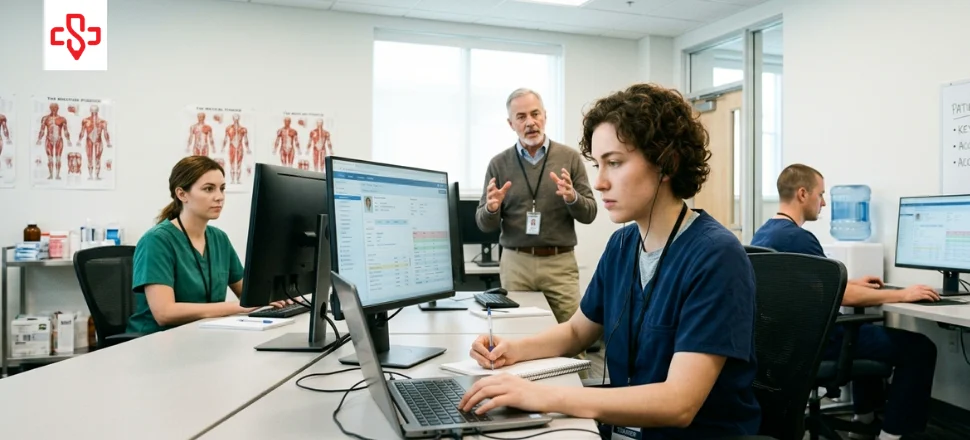

Otolaryngology, commonly known as ENT (ear, nose, and throat) medicine, is a specialty that requires precise documentation, detailed patient histories, and accurate procedural notes. From diagnosing sinus infections and hearing disorders to managing complex head and neck conditions, ENT specialists handle a wide range of cases daily. Given the complexity of these cases, documentation demands can be overwhelming. This is where Otolaryngology Medical Scribes play a critical role.
By assisting physicians with real-time documentation, they help streamline workflows, improve accuracy, and allow providers to focus on patient care. Similarly, outpatient scribes support busy clinics by managing documentation efficiently, ensuring smoother patient flow and reduced administrative burden.
The Growing Documentation Burden in ENT Practices
ENT specialists must document detailed findings such as nasal endoscopy results, audiology reports, throat examinations, and surgical procedures. Therefore, accurate documentation is essential for diagnosis, treatment planning, and compliance.
In fact, studies show that physicians spend nearly two hours on electronic documentation for every hour of direct patient care. This imbalance significantly affects productivity in busy ENT clinics.
As a result, many otolaryngologists experience increased administrative burden and reduced time for patient interaction. Consequently, healthcare practices are increasingly turning to medical scribes for support.
Who Are Otolaryngology Medical Scribes?
Otolaryngology Medical Scribes are trained professionals who assist ENT physicians by documenting patient encounters in real time. They capture clinical information directly into the electronic health record (EHR), including patient histories, exam findings, procedures, and treatment plans.
In addition, scribes ensure that all documentation is structured, accurate, and compliant with healthcare standards. This allows physicians to maintain efficiency while delivering high-quality care.
Key Responsibilities of Otolaryngology Medical Scribes
Medical scribes in ENT settings handle a wide range of tasks that support both clinical and administrative workflows.
Real-Time Clinical Documentation
Scribes document patient visits as they happen. As a result, physicians do not need to complete notes after appointments, which significantly reduces administrative workload.
Procedure and Exam Documentation
ENT specialists frequently perform procedures such as nasal endoscopies, laryngoscopies, and ear examinations. Therefore, scribes into ENT practices ensure that all procedural details are accurately recorded in the EHR.
Patient History and Follow-Ups
Scribes capture comprehensive patient histories and track follow-up visits. In doing so, they support continuity of care and ensure that important clinical information is readily available.
Coordination of Clinical Information
ENT care often involves collaboration with audiologists, radiologists, and other specialists. Thus, scribes help maintain organized records that improve communication across care teams.
How Otolaryngology Medical Scribes Improve Workflow Efficiency
Medical scribes play a vital role in improving efficiency within ENT practices. For example, by handling documentation tasks, they allow physicians to focus entirely on patient care.
Additionally, real-time documentation ensures that charts are completed during the visit, reducing delays and improving clinic flow.
Documentation support also helps reduce administrative strain. You can learn more about how scribes reduce workload in this resource on reducing physician paperwork.
Reducing Burnout in ENT Specialists
Physician burnout is a growing concern across all specialties, including otolaryngology. Long hours, high patient volumes, and extensive documentation requirements contribute to stress and fatigue.
According to recent reports, nearly 50% of physicians experience symptoms of burnout, with administrative workload being a major contributing factor. Therefore, reducing documentation burden is critical for improving provider well-being.
Medical scribes help address this challenge by taking over charting responsibilities. As a result, physicians can spend less time on paperwork and more time focusing on patient care.
Operational Benefits of Otolaryngology Medical Scribes
| ENT Workflow Area | Without Scribes | With Otolaryngology Medical Scribes |
|---|---|---|
| Documentation Time | Completed after clinic hours | Handled in real time |
| Physician Focus | Split between patient and EHR | Fully focused on patient care |
| Procedure Notes | Risk of incomplete documentation | Accurate and detailed recording |
| Clinic Efficiency | Delays between appointments | Smoother patient flow |
| After-Hours Work | Frequent charting after clinic | Minimal backlog |
Enhancing Patient Experience
Patients benefit when physicians can focus fully on their concerns without being distracted by documentation tasks. As a result, communication improves, and patients feel more engaged in their care.
Furthermore, efficient workflows reduce waiting times and improve the overall clinic experience.
Scribes also play a valuable role in other specialties. For instance, their impact in long-term patient care is highlighted in this article on geriatric care support.
The Future of Otolaryngology Medical Scribes
As ENT practices continue to grow and patient demand increases, the need for efficient documentation solutions will become even more important. Therefore, integrating medical scribes into clinical workflows is a forward-thinking strategy for healthcare organizations.
Ultimately, scribes provide a scalable solution that improves efficiency, reduces burnout, and enhances patient care quality.
Conclusion
Otolaryngology involves complex cases that require detailed and accurate documentation. However, managing these requirements can place a significant burden on physicians.
Otolaryngology Medical Scribes offer a practical solution by handling real-time documentation, improving workflow efficiency, and supporting clinical accuracy. As a result, ENT specialists can focus more on patient care and less on administrative tasks.
In conclusion, as healthcare continues to evolve, medical scribes will play an increasingly important role in helping ENT practices maintain efficiency, improve patient outcomes, and reduce physician workload.