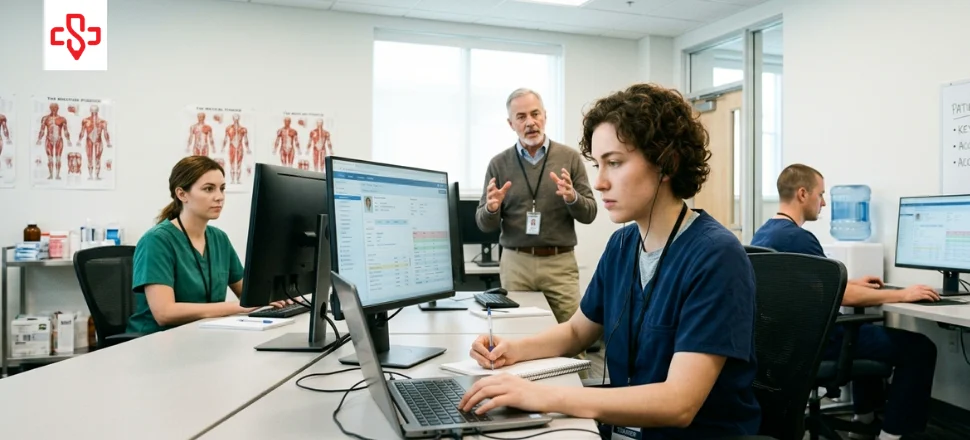

In the world of modern healthcare, few specialties demand as much precision, detail, and accountability as spine surgery. Indeed, from complex preoperative assessments to intricate intraoperative details and postoperative care plans, every step must be documented with absolute accuracy. Therefore, this is where spine surgery scribes play a transformative role.
As a result, documentation requirements continue to grow alongside the increasing complexity of electronic health records (EHRs), and spine surgeons are facing a mounting administrative burden. In fact, physicians today spend nearly 1.5 to 2 hours on documentation for every hour of patient care, significantly reducing the time available for direct clinical interaction. Consequently, this imbalance affects both efficiency and patient engagement.
To address this challenge, spine surgery scribes are emerging as essential allies, ensuring that documentation keeps pace with clinical excellence. Moreover, their support allows surgeons to focus more on patient care rather than administrative tasks.
Similarly, for outpatient spine procedures, specialized outpatient scribing solutions help maintain efficiency while managing high patient volumes.
The Unique Complexity of Spine Surgery Documentation
Spine surgery is inherently high-risk and detail-intensive. For example, surgeons must document not only standard patient information but also highly specific clinical data, including:
- Neurological findings and deficits
- Imaging interpretations (MRI, CT scans, X-rays)
- Surgical techniques and instrumentation
- Implant details and positioning
- Postoperative recovery protocols
Unlike general practice, even minor documentation errors in spine surgery can lead to serious consequences, including incorrect treatment plans, compliance issues, or legal risks. Therefore, accurate and real-time documentation is not optional—it is critical.
Why Documentation Burden Is Higher in Spine Surgery
Spine surgeons often manage patients with chronic conditions, trauma cases, or degenerative diseases. As a result, each case involves extensive clinical histories, multiple imaging studies, and detailed procedural documentation.
Additionally, studies show that clinicians can spend nearly half of their working hours on EHR and documentation-related tasks, highlighting the significant administrative burden in high-acuity specialties like spine surgery.
Consequently, this administrative load contributes to physician fatigue, delays in chart completion, and an increased risk of burnout.
The Role of Spine Surgery Scribes
Spine Surgery Scribes are trained professionals who assist surgeons by documenting patient encounters in real time. Importantly, their responsibilities extend beyond basic note-taking and include:
- Capturing detailed patient histories and physical exam findings
- Documenting intraoperative details and surgical workflows
- Updating EHRs with accurate and structured data
- Ensuring compliance with billing and coding requirements
- Reducing after-hours charting for surgeons
By doing so, scribes allow spine surgeons to focus entirely on patient care and surgical precision.
Efficiency Gains with Spine Surgery Scribes
The impact of scribes on efficiency is significant. For instance, studies show that medical scribes can reduce physician documentation time, with reported improvements ranging from around 10% to over 30%, depending on workflow and specialty.
In some cases, documentation time has been cut nearly in half, demonstrating the powerful role scribes play in streamlining clinical operations.
As a result, for spine surgeons, this translates into more time in the operating room, improved patient interactions, and reduced administrative stress.
Key Documentation Areas Supported by Spine Surgery Scribes
| Documentation Area | Challenges | Scribe Contribution |
|---|---|---|
| Preoperative Evaluation | Extensive patient history and imaging review | Accurate capture of history and diagnostic findings |
| Intraoperative Notes | Detailed procedural steps and implant data | Real-time documentation of surgical workflow |
| Postoperative Care | Complex recovery plans and follow-ups | Structured and timely chart updates |
| Billing & Compliance | Strict coding and regulatory requirements | Ensuring complete and compliant documentation |
Improving Accuracy and Reducing Errors
In high-stakes specialties like spine surgery, documentation errors can have serious clinical and financial implications. For example, missing details or delayed entries can lead to miscommunication, billing denials, or even compromised patient safety.
However, medical scribes help reduce these risks by ensuring that documentation is completed in real time and reviewed for accuracy. As a result, this proactive approach minimizes omissions and enhances the overall quality of clinical records.
Enhancing Surgeon Productivity and Well-Being
Documentation burden is one of the leading contributors to physician burnout. Therefore, by offloading administrative tasks, spine surgery scribes help restore balance to the surgeon’s workflow.
With this support, surgeons can:
- Spend more time with patients
- Reduce after-hours charting
- Improve work-life balance
- Increase procedural efficiency
Ultimately, this not only benefits physicians but also enhances the overall patient experience.
Integration with Advanced Scribing Solutions
Modern healthcare organizations are increasingly adopting specialized scribing services tailored to surgical workflows. In particular, providers like medical scribing experts offer customized solutions designed to meet the unique needs of high-acuity specialties.
Furthermore, these services include scalable programs, trained scribes, and workflow optimization strategies that align with the demands of spine surgery.
Customized Services for Surgical Specialties
To ensure effectiveness, dedicated scribe programs align documentation support with surgical protocols, compliance standards, and EHR systems.
The Future of Spine Surgery Documentation
As healthcare continues to evolve, the demand for accurate, efficient, and compliant documentation will only increase. Accordingly, Spine Surgery Scribes are poised to play an even greater role in this transformation.
At the same time, with advancements in technology, including AI-assisted documentation, scribes will continue to enhance clinical workflows while maintaining the human oversight necessary for accuracy and compliance.
Conclusion
Spine surgery is a high-stakes specialty where precision is paramount—not only in the operating room but also in documentation. However, the growing complexity of EHR systems and regulatory requirements has made documentation a significant burden for surgeons.
Therefore, Spine Surgery Scribes provide a powerful solution by ensuring accurate, real-time documentation while freeing surgeons to focus on what matters most: delivering exceptional patient care. If you’re considering implementing a scribe program, you can request a customized quote here.
In conclusion, as healthcare organizations strive to improve efficiency, reduce burnout, and enhance patient outcomes, the role of spine surgery scribes will continue to expand—making them an indispensable part of modern surgical teams.