Real time documentation is quickly becoming the standard that separates high-performing care teams from those still fighting a nightly backlog of charts. When a provider documents while the patient is still in the room, the note reflects what actually happened. When documentation waits until 9 p.m., the note reflects what the provider can still remember. That gap between the two approaches shapes accuracy, compliance, and how safe a patient’s care truly is.
Remote medical scribes exist to close that gap. A trained scribe joins the encounter, listens closely, and enters findings into the chart as the visit unfolds. The provider never has to choose between looking at the patient and looking at the keyboard. Real time documentation, supported by a dedicated scribe, removes that trade-off entirely.
The shift matters more than it might seem at first glance. Documentation isn’t just paperwork; it’s the record every future clinician, auditor, and care coordinator relies on. When that record is built in the moment, it holds up. When it’s rebuilt from memory later, small details slip, and small details are often the ones that matter most in a patient’s history.
Every one of these pieces feeds back into the same goal: improving patient care by keeping the chart accurate, current, and usable by the next clinician who opens it.
Why End-of-Day Charting Creates Risk
Providers without scribe support often follow a familiar pattern: see 20 to 25 patients, then sit down hours later to reconstruct each visit from memory. The workflow feels manageable until the details start to blur.
- Providers rely on memory hours after the visit, so exact symptoms, timelines, and patient quotes get lost.
- Fatigue at the end of a long shift lowers clinical precision and raises the odds of an error.
- Colleagues working from an incomplete chart make decisions without the full picture.
- Reviewers flag vague or incomplete notes during payer audits, which increases denial risk.
What Real Time Documentation Looks Like in Practice
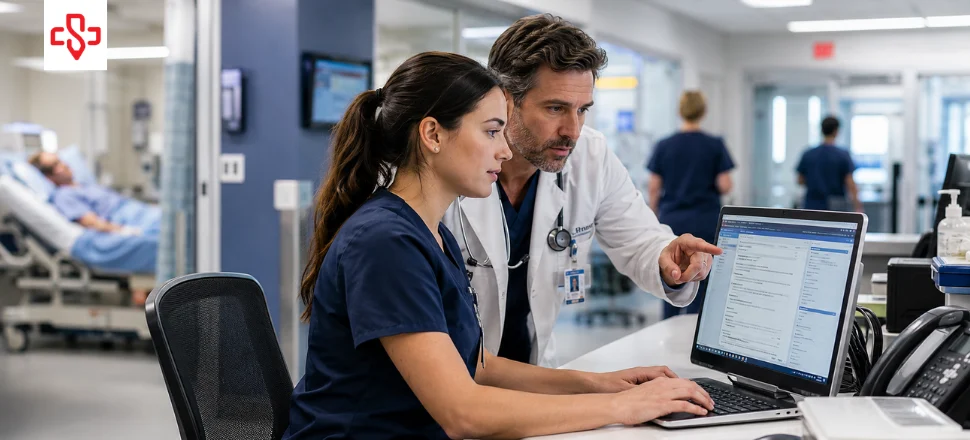
A remote scribe connects securely to the visit and builds the note as the conversation happens. The provider stays focused on the patient while the scribe organizes history, exam findings, and the plan in real time. This shift changes the visit in a few concrete ways:
- Every detail gets captured as it’s said, so nothing depends on later recall.
- Providers stop splitting attention between typing and thinking, which lowers mental strain.
- Care teams see a finished note within minutes instead of hours, which speeds up communication.
- Providers leave on time, because the chart is already done.
Real-Time vs. End-of-Day Notes: A Side-by-Side Comparison
| Factor | End-of-Day Notes | Real Time Documentation |
|---|---|---|
| Accuracy of detail | Depends on memory hours later | Captured as the encounter happens |
| Provider cognitive load | High, split between charting and recall | Low, provider stays present with patient |
| Chart availability for care team | Delayed by hours | Available within minutes |
| Compliance and audit readiness | Higher risk of vague notes | Structured, complete documentation |
| Provider work-life balance | Charting extends into evenings | Documentation ends when the shift ends |
Why Timing Directly Affects Patient Safety
Delayed charting doesn’t just create inconvenience; it distorts clinical meaning. A patient who describes “chest discomfort” during the visit can become simply “pain” in a rushed note written that evening. That small shift in language can mean the difference between prompting a cardiac workup and missing it entirely.
A scribe working in real time prevents that distortion. Vital signs, medications, symptoms, and the care plan get recorded accurately afterward. This consistently supports fewer medical errors, sharper diagnostic accuracy, and better continuity of care as a patient moves between providers and settings.
What a Remote Scribe Actually Does During the Visit
Beyond typing, a well-trained scribe actively supports the clinical encounter by:
- Interpreting the conversation in real time and organizing it into the right note sections
- Flagging missing elements, such as review of systems or physical exam findings, before the visit ends
- Aligning documentation with payer and compliance requirements
- Supporting both inpatient and outpatient workflows, including high-volume settings like multi-patient ED documentation
This human-in-the-loop model consistently outperforms auto-generated templates, particularly overnight and on-call, where overnight documentation demands leave little room for delayed charting.
Remote Scribes vs. In-Person Scribes
In-person scribes have supported hospitals for years, but remote scribes now offer advantages many practices didn’t have before:
- They scale instantly across time zones and multiple locations.
- They remove the need for extra physical workspace.
- They provide coverage around the clock, which suits telehealth, overnight shifts, and rural facilities.
- They connect providers with the best-matched scribe, since geography no longer limits the talent pool.
For many practices, remote support now matches or exceeds what an in-person scribe could offer, while adding flexibility that on-site staffing never could.
Supporting the Whole Documentation Lifecycle
Real time documentation works best as part of a broader documentation strategy, not as a one-time fix. That starts with getting new scribes up to speed quickly and matching them to a provider’s specialty and workflow from day one.
It also means continuing to improve EHR note quality over time through feedback and regular quality checks, rather than treating the first version of a note as the final one.
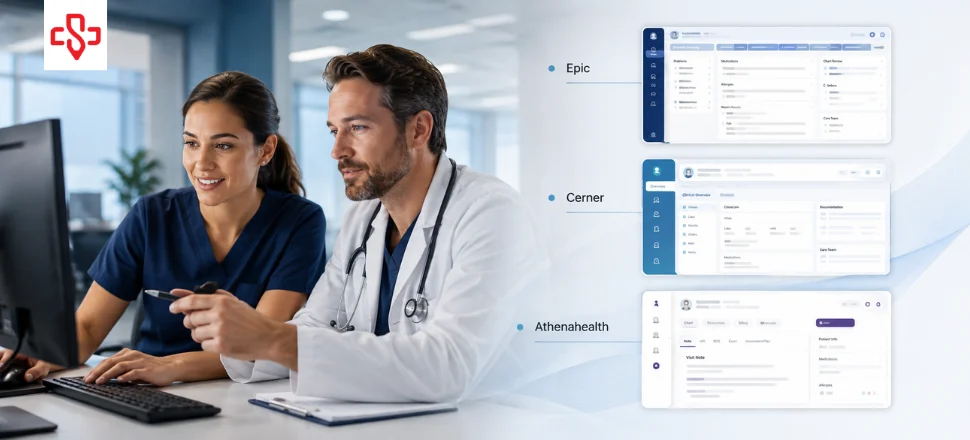
Transitions add another layer of risk. When a practice adopts new software, it needs EHR implementation support to keep documentation consistent through the change instead of losing ground during the switch.
Research on ambient and scribe-supported documentation backs this up. A multicenter quality improvement study on ambient AI scribes found meaningful reductions in clinician burnout and administrative burden when documentation moved closer to the point of care (PubMed, 2025). The findings reinforce that timing, not just tooling, drives better outcomes for providers and patients alike.
Real Time Documentation Is No Longer Optional
Rising patient volumes, tighter margins, and growing compliance demands make delayed charting harder to justify every year. Real time documentation, delivered through skilled hospital scribe services, prevents the kind of documentation drift that leads to clinical errors, denied claims, and provider burnout. It leads to safer care, cleaner charts, and a workday that actually ends on time.
Ready to eliminate documentation delays and strengthen patient safety? Consult with Scribe.ology today and see how real-time remote scribe support can transform your practice.