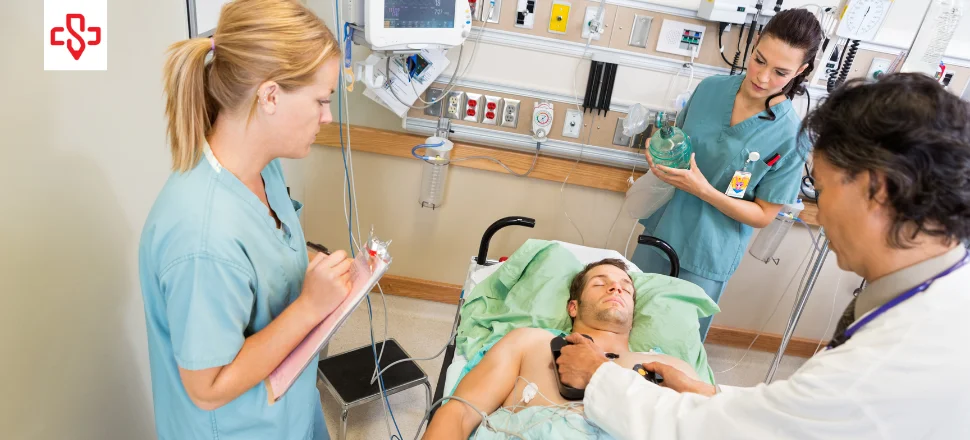
Every provider knows the feeling. A long shift ends, but the work doesn’t. Instead of heading home, physicians stay late, clicking through EMR templates long after the last patient has gone. As a result, burnout climbs and job satisfaction falls. Fortunately, the fix isn’t more caffeine or better dictation software — it’s people. Scribes for patient care keep documentation on track in real time, so providers can focus on what they trained to do: treat patients.
The Documentation Burden Physicians Carry
Physicians spend an enormous share of every shift documenting rather than treating. In fact, a widely cited study found that 43–44% of emergency physicians’ time went toward data entry, compared with just 28% spent in direct patient contact. Consequently, that imbalance feeds stress, fatigue, and long-term burnout.
Scribes for patient care address this gap directly. Specifically, they:
- Document histories, exams, and provider impressions as the visit happens.
- Update labs, imaging, and procedure notes without delay.
- Free providers from finishing charts after hours.
From emergency department support to multi-specialty outpatient clinic scribes, live documentation support is restoring balance to modern medicine.
How Scribes for Patient Care Cut After-Hours Charting
Real-Time Documentation
Because a scribe documents during the encounter itself, the chart is often ready for review the moment the visit ends. Therefore, providers close their day instead of reopening it at home.
Eliminating “Pajama Time”
Many physicians spend hours at night finishing notes, a habit nicknamed “pajama time.” Live documentation support eliminates this pattern by keeping charts current throughout the shift, not after it.
Faster Discharges and Transfers
Timely notes matter beyond convenience. When documentation keeps pace with care, patients move through admission, discharge, and transfer faster, which in turn reduces boarding and improves overall throughput.
Protecting Provider Well-Being and Retention
Burnout isn’t only a physician problem — it’s a system problem, too. After all, recruiting and training a replacement provider can cost a hospital hundreds of thousands of dollars. That’s why dedicated scribe support plays such a direct role in retention. Specifically, the benefits include:
| Impact Area | Without a Scribe | With a Scribe |
|---|---|---|
| After-hours charting | 1–2 hours nightly | Near zero |
| Patients seen per hour | Baseline | 1–2 more per hour |
| Annual financial return per provider | — | $20,000+ |
| Provider turnover risk | Elevated | Reduced |
Put simply, happier providers stay longer. That outcome benefits patients and the hospital’s bottom line alike.
Why the Human Element Still Matters
Technology alone hasn’t solved burnout. Voice recognition tools and AI note-takers, however advanced, still lack the context and adaptability of a trained scribe. By contrast, a live scribe brings:
- Observational insight that captures nonverbal cues and provider shorthand.
- Instant communication, so providers can clarify documentation in the moment.
- Team integration, since on-site or virtual scribes function as part of the care team.
This human element is precisely what makes virtual scribe services and on-site programs so effective in high-pressure care settings.
The Patient-Facing Impact
Ultimately, the benefits of scribes for patient care extend well past the provider. Patients notice when a physician is present and engaged rather than staring at a screen. As a result, visits translate into:
- Higher patient satisfaction scores.
- Stronger communication and better adherence to care plans.
- Fewer errors, since providers focus on medicine instead of multitasking.
Meanwhile, hospitals running inpatient documentation programs report the same pattern at scale: better-documented charts, fewer errors, and providers who leave on time.
Bringing It All Together
Burnout in modern medicine isn’t going away on its own. Providers need support, and scribes for patient care deliver it by handling the heavy lifting of documentation. As a result, physicians leave on time, hospitals protect revenue, and patients get a provider who’s actually looking at them. Partner with Scribe.ology to bring dedicated scribe support to your team and give your providers back the time — and focus — patient care deserves.