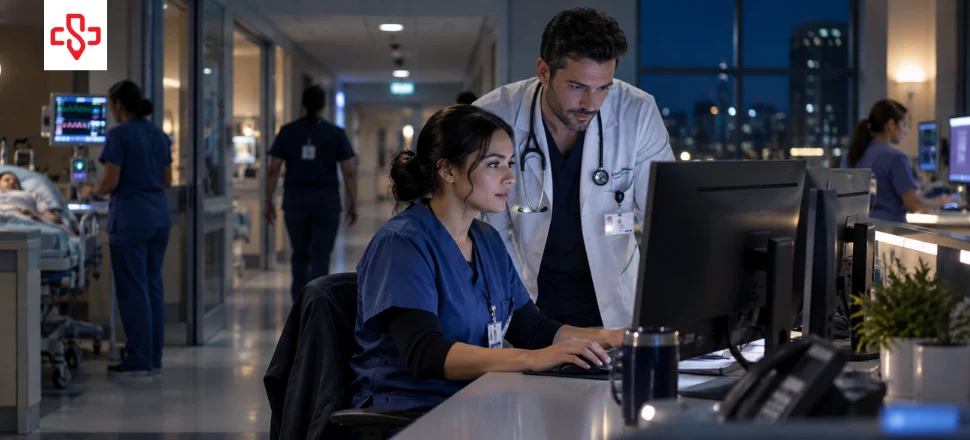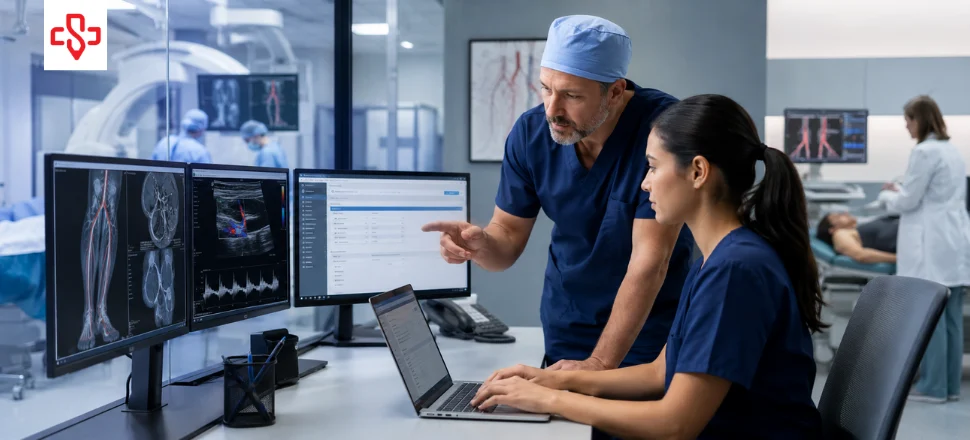

Ask any physician what eats up their day, and documentation usually tops the list. Between charting, coding, and clicking through electronic health records, many providers spend more hours on paperwork than on patients. This is exactly the gap medical scribing was built to close.
So what is medical scribing, exactly? At its core, it’s the practice of having a trained professional accompany a physician during patient encounters and handle real-time clinical documentation. The physician stays focused on the patient, while the scribe captures the visit accurately in the record.
The Role of a Medical Scribe
A medical scribe is not a clinician and does not make medical decisions. Instead, they document what happens during a visit as it unfolds — patient history, exam findings, assessments, and treatment plans — under the physician’s direction. Practices exploring medical scribe solutions often start here, since understanding the scope of the role shapes every staffing decision that follows.
This distinction matters. A scribe supports the workflow; they do not replace clinical judgment. Consequently, physicians remain fully responsible for reviewing and signing off on every note before it becomes part of the permanent record.
Core Responsibilities of a Medical Scribe
While duties vary by specialty and setting, most medical scribing services cover a consistent set of tasks. These typically include:
- Documenting the history of present illness, review of systems, and physical exam findings
- Recording assessment and plan details as dictated or observed during the visit
- Entering orders for labs, imaging, or referrals under physician direction
- Retrieving prior records or test results relevant to the visit
- Flagging incomplete documentation before the chart is closed
Because scribes work across specialties, the exact mix of tasks shifts depending on setting. A scribe supporting an orthopedic surgeon documents differently than one working in a pediatric clinic or an emergency department.
Types of Medical Scribing
Medical scribing today isn’t a single model. As healthcare organizations look for flexible ways to reduce documentation burden, three main formats have emerged.
In-Person Scribes
An in-person scribe is physically present in the exam room alongside the physician and patient. This model works well in high-touch specialties where nuance and nonverbal cues matter, though it does require dedicated physical space and onboarding time.
Virtual Medical Scribes
Virtual scribes document remotely, typically listening in through a secure audio or video connection during the visit. Because virtual scribes aren’t tied to a single location, clinics can scale support up or down without the logistics of hiring locally. For many practices, virtual medical scribes have become the more practical option, since they lower overhead while still providing real-time documentation support.
AI-Assisted and Ambient Scribes
Ambient AI scribes use speech recognition to generate a draft note directly from the conversation between physician and patient. A human still typically reviews the output, but the technology accelerates the first draft considerably. Recent research on ambient AI scribe adoption found meaningful reductions in physician task load and burnout scores after a short implementation period, alongside improved usability ratings.1 That said, most organizations still pair AI-generated drafts with human oversight, whether that’s a physician review step or a trained scribe finalizing the note.
Why Healthcare Teams Are Adopting Medical Scribing
Documentation burden is consistently cited as a top driver of physician burnout, and scribing directly targets that problem. When a scribe handles the charting, physicians typically see several benefits:
- More time with patients. Removing documentation from the visit itself lets physicians focus on the conversation rather than the keyboard.
- Reduced after-hours charting. Notes completed during the visit mean less “pajama time” spent finishing charts at home.
- Improved note quality. A dedicated scribe can produce more thorough, consistent documentation than a rushed end-of-day note.
- Higher patient satisfaction. Patients often report feeling more heard when their physician isn’t dividing attention between them and a screen.
Because these benefits compound across a full patient panel, even a modest reduction in per-visit documentation time can translate into meaningfully fewer overtime hours across a practice. That reliability is also why EHR accuracy support from a trained scribe often matters more than the documentation tool itself.
Is Medical Scribing Right for Your Practice?
Not every practice needs the same scribing model. High-volume specialties like emergency medicine or orthopedics often lean toward in-person or virtual scribes for complex, detail-heavy visits. Primary care and behavioral health practices, on the other hand, may find ambient AI tools sufficient for more templated encounter types.
Before committing to one approach, it helps to review a breakdown of choosing the right scribe model based on visit complexity, EHR compatibility, budget, and how much oversight your team can realistically provide for AI-generated drafts.
Getting Started with Medical Scribing
Introducing scribes into a practice usually works best as a phased rollout rather than a full switch overnight. Many organizations start with one or two physicians, measure the impact on documentation time and note quality, and then expand based on results. Training also matters, which is why working through an outpatient scribe hiring checklist before onboarding helps confirm a candidate’s EHR familiarity and specialty fit up front.
Ultimately, medical scribing exists to solve a very specific problem: giving physicians back the time and attention that documentation quietly consumes. Whether that support comes from a person in the room, a remote listener, or an AI-generated draft, the goal is the same — accurate records, without sacrificing the patient relationship.
Scrib.eology helps healthcare teams implement scribing solutions that fit their specialty, patient volume, and EHR setup. Reach out to talk through which model makes sense for your practice.