
Healthcare providers across the country now treat increasingly diverse patient populations. As a result, language differences can create real barriers to accurate documentation and quality care. Bilingual medical scribes offer a practical solution. For instance, they sit alongside physicians to capture clinical detail, while also helping bridge communication gaps with patients who speak limited English. For practices serving multilingual communities, this dual capability is becoming a necessity, not a luxury.
Why Language Access Matters in Clinical Documentation
When a patient and provider don’t share a common language, important details can get lost. For example, symptom descriptions, medication histories, and family context often carry nuance. Unfortunately, gestures and broken phrases rarely capture that nuance well. That’s why a medical scribe service staffed with bilingual professionals helps ensure the patient’s actual meaning makes it into the chart.
This matters clinically. Specifically, miscommunication during history-taking can lead to diagnostic delays and medication errors. Moreover, this risk grows in populations with limited English proficiency. In fact, research indexed on PubMed shows that language barriers independently raise the risk of adverse events during care. Therefore, accurate, real-time documentation support matters for safety, not just efficiency.
How Bilingual Scribes Support Physicians
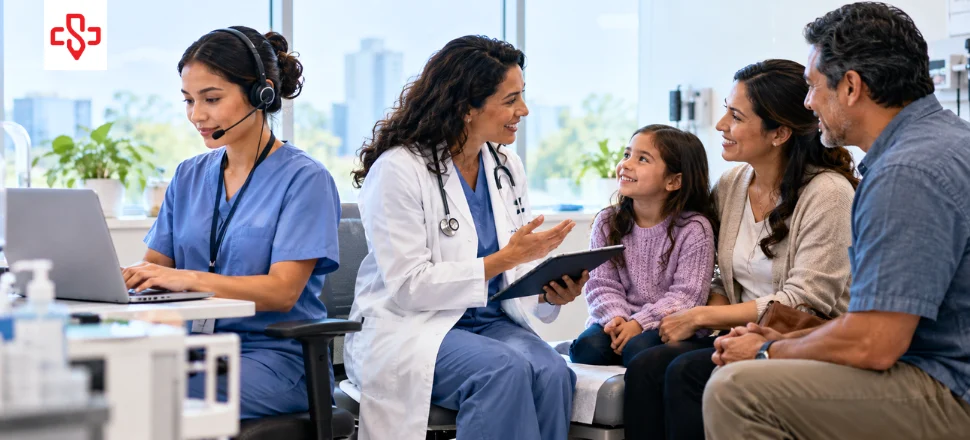
A bilingual scribe does more than translate. In addition, they help smooth the interaction itself. For example, a scribe might clarify a patient’s description of pain in their native language, then translate that detail precisely into the note. Similarly, they might help a provider confirm medication adherence after earlier instructions were misunderstood. Because of this, the support proves especially valuable in outpatient scribing services. After all, visit time runs limited there, and every minute of miscommunication compounds delays for the rest of the day.
Where Bilingual Scribes Make the Biggest Difference
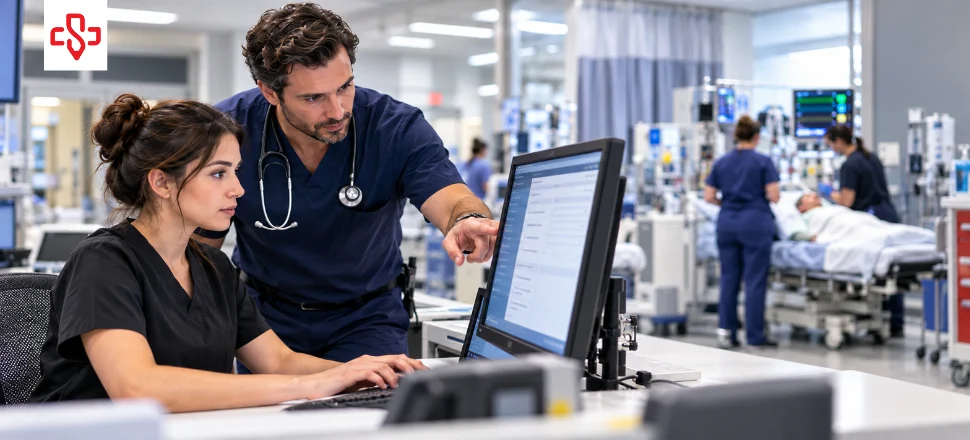
Not every setting has equal need, but a few stand out clearly. For instance, emergency departments serving diverse urban populations often see the highest daily volume of non-English-speaking patients. Consequently, this makes live ER medical scribes particularly valuable when seconds matter and clarity becomes critical. Similarly, community clinics and safety-net hospitals tend to serve higher proportions of multilingual patients. Over time, consistent language support across visits builds trust in these settings.
| Factor | Standard Scribe Support | Bilingual Scribe Support |
|---|---|---|
| Documentation accuracy with LEP patients | Variable, dependent on interpreter availability | Consistently high, real-time clarification |
| Patient comfort and trust | Can be lower without direct language rapport | Improved through direct communication |
| Visit efficiency | Slower with third-party interpretation | Faster, fewer clarifying rounds needed |
| Risk of miscommunication errors | Higher | Reduced |
Building a Sustainable Language Access Strategy
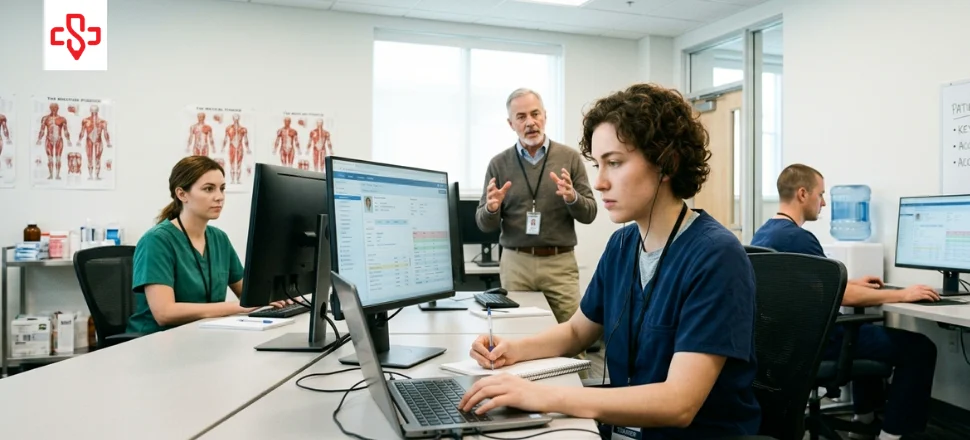
Adding bilingual scribes to a practice takes more than hiring for a language skill. After all, these scribes still need the same clinical training and documentation standards as any other scribe. That’s why the best programs combine language fluency with strong EHR implementation support. This way, documentation quality never takes a back seat to translation during system transitions.
Practices considering this step should also think about scale. For example, a single bilingual scribe helps one provider, while a broader bench of language-capable scribes allows scheduling flexibility across shifts and departments. In particular, this flexibility matters most in hospitals and overnight hospital scribe programs, where patient populations shift depending on the time of day.
The Bottom Line
Patient populations will keep diversifying, and as a result, the ability to document care accurately across language barriers isn’t a peripheral concern anymore. Instead, it sits at the center of safe, effective medicine. Ultimately, bilingual medical scribes meet that need without forcing providers to compromise on documentation quality or visit efficiency.
Scribe.ology provides trained bilingual and Spanish-speaking medical scribes who understand both clinical documentation standards and the communication needs of diverse patient populations. If your practice is ready to close language gaps without sacrificing chart accuracy, Scribe.ology’s team is ready to help.