Nephrology visits often require detailed review of chronic kidney disease progression, laboratory trends, medications, comorbidities, fluid status, and long-term care plans. Scribe.ology’s nephrology medical scribes provide real-time EHR documentation support so nephrologists can spend more of the visit focused on the patient and less time charting.
Kidney care is highly longitudinal. A single visit may involve reviewing renal function, blood pressure, electrolytes, medication changes, diabetes or cardiovascular comorbidities, and the patient’s response to an ongoing treatment plan. Capturing that clinical story accurately can add significant documentation time to an already busy clinic day.
Scribe.ology was founded by physicians to help providers “Practice Medicine Again.” Our scribes document patient encounters in real time, helping nephrologists stay engaged with patients while the details of the visit are captured in the EHR for provider review and sign-off.
Our programs are tailored to each practice’s workflow, provider preferences, EMR, and patient volume, helping support timely documentation and smoother outpatient clinic flow.

Outpatient nephrology practices manage recurring, data-rich visits where small changes in labs, medications, symptoms, and comorbidities can matter. Scribe.ology adapts the documentation workflow to the nephrologist’s preferred note structure, clinic rhythm, and EHR rather than applying a one-size-fits-all model.

Working under the direction of the nephrologist, a trained medical scribe supports documentation throughout the patient encounter. The provider remains responsible for diagnosis, clinical interpretation, treatment decisions, orders, prescriptions, and final approval of the medical record.

Nephrology visits often require detailed conversations about disease progression, medications, blood pressure, diet, dialysis planning, and long-term risk. A scribe can reduce the need for the nephrologist to divide attention between the patient and the EHR, creating more room for explanation, education, and shared decision-making.
| For the Nephrologist | For the Practice |
|---|---|
| More patient-focused visits | More consistent documentation workflows |
| Real-time EHR support | Improved clinic flow and chart completion |
| Less after-hours charting | Support for recurring high-detail visits |
| Provider-specific documentation support | Flexible coverage aligned to practice needs |

Nephrology documentation requires familiarity with specialty terminology, recurring laboratory data, chronic disease management, and the structure of longitudinal follow-up notes. Scribe.ology uses a structured training approach and then adapts the scribe to the specific practice, physician preferences, and documentation environment.
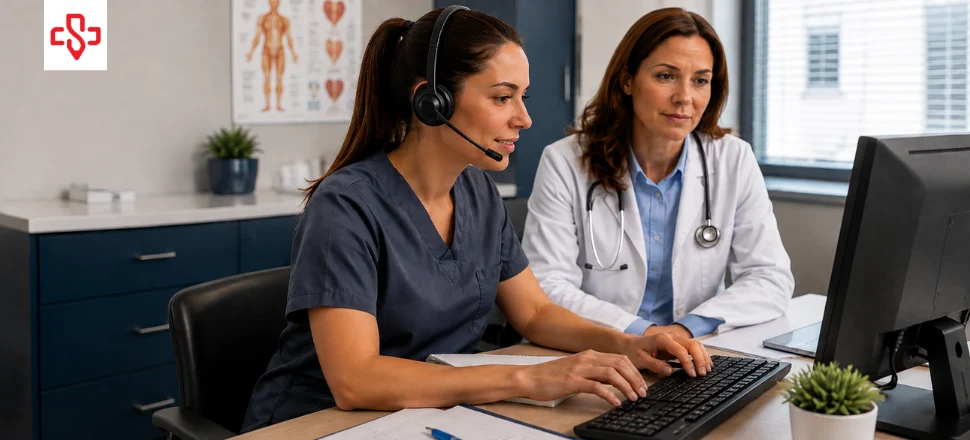
Scribe.ology can align scribe coverage to the way your nephrology practice operates, including in-person and virtual models.
A scribe works alongside the nephrologist in the outpatient clinic and documents the encounter in real time.
Remote scribes provide real-time documentation support through a secure workflow, giving practices added flexibility without requiring another person in the exam room.

Nephrology scribe programs can be designed for:
Scribe.ology combines trained medical scribes with workflows customized around the way each physician practices. Our outpatient programs are designed to reduce EHR documentation burden while supporting provider efficiency, patient connection, and timely chart completion.
A nephrology medical scribe documents patient encounters in real time under the direction of the nephrologist. The scribe can capture histories, examination findings, provider-discussed laboratory information, treatment plans, and follow-up details for physician review and sign-off.
A scribe can record laboratory values, trends, and clinical interpretations communicated by the nephrologist. The provider remains responsible for interpreting the results and making clinical decisions.
Yes. Scribes can support the documentation of recurring CKD visits, including histories, lab review, medication changes, comorbidities, and provider-directed care plans.
Yes. Virtual scribes can provide real-time remote documentation support for outpatient and telehealth workflows, which can be useful for practices that need flexible coverage.
Scribe.ology tailors programs to the practice’s documentation environment and trains scribes around the existing EHR, templates, workflow, and provider preferences.
No. Medical scribes support documentation only. Diagnosis, interpretation, prescribing, orders, treatment decisions, and final approval of the medical record remain the responsibility of the licensed provider.