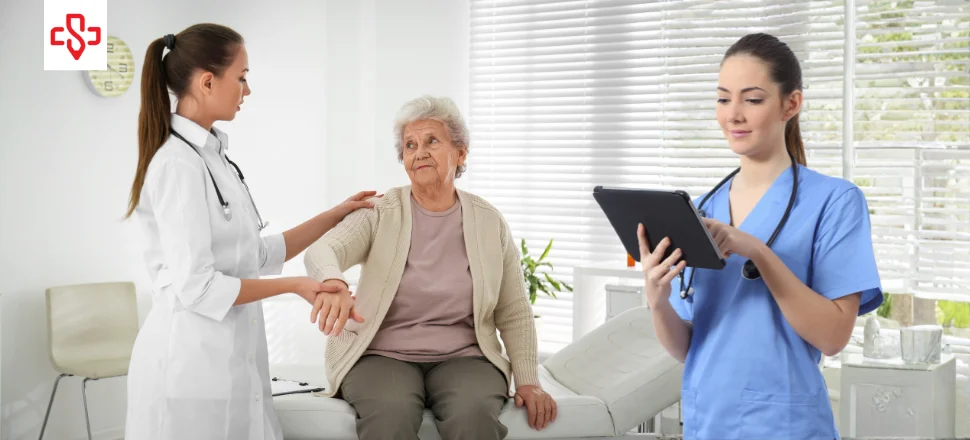
The senior population is growing fast, and geriatric practices are feeling the pressure. Older patients need longer visits, more thorough evaluations, and ongoing management of multiple chronic conditions. All of that generates a heavy documentation load. A geriatric medical scribe steps into that gap, handling charting in real time so physicians can focus on the patient in front of them instead of the screen beside them.
From hospital floors to outpatient care settings, scribes trained for elder care are becoming a practical answer to rising administrative demands. Their role goes beyond typing notes. They help geriatric teams work faster, document more accurately, and give older adults the attentive care they need.
Why Elder Care Needs a Geriatric Medical Scribe
Geriatric medicine is rarely simple. Many older patients manage diabetes, heart disease, osteoporosis, and cognitive decline at the same time. Recent CDC-published research found that 93% of older adults now report at least one chronic condition, and nearly 79% manage two or more. Each of these conditions requires detailed notes, medication reviews, and consistent monitoring over time.
Visits also cover sensitive topics: caregiver concerns, mobility limits, and advanced care planning. A geriatric medical scribe captures these details accurately while the provider stays focused on the conversation, not the keyboard.
Core Responsibilities of a Geriatric Medical Scribe
A well-trained scribe takes over the repetitive parts of charting so physicians reclaim their time. Typical responsibilities include:
- Recording histories, symptoms, and exam findings as they happen
- Entering orders for labs, imaging, and specialist referrals
- Updating medication lists after every visit
- Documenting caregiver instructions and follow-up plans
- Closing charts before the next patient arrives
This shift matters. When scribes manage documentation, practices see fewer same-day documentation backlogs and cleaner records at the end of each day.
Easing Physician Burnout in Geriatric Practices
Geriatric physicians often carry a heavier administrative load than other specialties. Long visits, complex charts, and after-hours EHR work add up quickly. A geriatric medical scribe absorbs much of that burden directly.
With support in place, providers finish their shifts with fewer open charts and less mental fatigue. Many practices that add physician burnout support report noticeably higher job satisfaction among their geriatric teams within just a few months.
Improving Accuracy for Complex Medication Regimens
Accuracy carries real weight in elder care. Older adults frequently take five or more medications, and a missed detail can lead to dangerous interactions. A geriatric medical scribe keeps medication lists current, records patient responses during reviews, and documents treatment changes the moment they happen.
This level of detail reduces the risk of oversight and gives every provider on the care team a reliable, up-to-date chart to work from.
Supporting Telehealth and Home-Based Senior Care
Telehealth has opened new doors for seniors who face mobility or transportation barriers. A geriatric medical scribe documents these virtual visits in real time, preparing summaries, orders, and follow-up notes before the call even ends.
As home-based geriatric programs expand, this kind of support keeps documentation consistent whether a visit happens in a clinic, a living room, or through a video call.
Strengthening Care Coordination Across Specialists
Older patients typically see several providers: primary care physicians, cardiologists, neurologists, and physical therapists among them. Without tight coordination, tests get duplicated and details get lost between appointments.
A geriatric medical scribe helps close those gaps by preparing detailed visit summaries, uploading outside reports, and flagging issues that need urgent attention. Every provider then works from the same accurate picture of the patient’s care.
| Care Setting | Without a Geriatric Medical Scribe | With a Geriatric Medical Scribe |
|---|---|---|
| Outpatient Clinic | Charting delayed until after hours | Charts closed same day, in real time |
| Telehealth Visit | Manual notes typed post-call | Summaries and orders ready instantly |
| Emergency department scribes | Rushed documentation under pressure | Accurate records despite high volume |
Value Across Acute and Chronic Care Settings
Most geriatric care happens in outpatient clinics, but many seniors also rely on hospital and urgent care services. In these fast-paced environments, scribes capture complex histories accurately, even when patients present with confusion or incomplete information. This consistency protects care quality no matter where the visit takes place.
What Makes Geriatric Documentation Different
Standard scribe training does not always prepare someone for the pace of elder care. Geriatric visits move slower, involve more caregivers in the room, and often require translating clinical language into terms a family member can understand. A geriatric medical scribe learns to track these extra layers without losing accuracy on the medical record itself.
Training also covers sensitivity around topics like cognitive decline, hospice discussions, and end-of-life planning. These conversations deserve careful, respectful documentation, and a scribe who understands the emotional weight behind them adds real value beyond typing speed.
Common Questions About Geriatric Medical Scribes
Do geriatric medical scribes need special training?
Yes. Beyond general scribe certification, most geriatric-focused scribes receive additional training in chronic disease terminology, polypharmacy documentation, and communicating with patients who have hearing, memory, or mobility limitations.
Can a geriatric medical scribe work across multiple care settings?
Absolutely. Many scribes support the same physician across outpatient visits, hospital rounds, and telehealth appointments, which keeps documentation consistent no matter where the patient is seen.
Choosing the Right Geriatric Medical Scribe Partner
As the senior population continues to grow, thorough documentation will only become more important. A skilled geriatric medical scribe brings more than clerical support. They strengthen the physician-patient relationship, sharpen accuracy, and help teams stay coordinated across every care setting, including virtual medical scribes for remote visits.
Practices that want to see the difference firsthand often start by reviewing the qualities of an effective scribe before making a hire. Scribe.ology trains scribes specifically for the demands of geriatric medicine, pairing clinical accuracy with the compassion senior patients deserve. Reach out today to see how the right scribe partner can lighten your team’s documentation load.