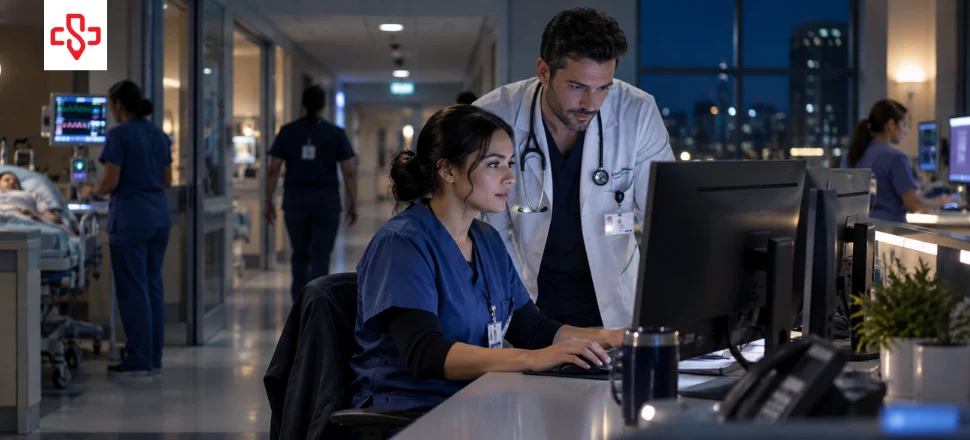
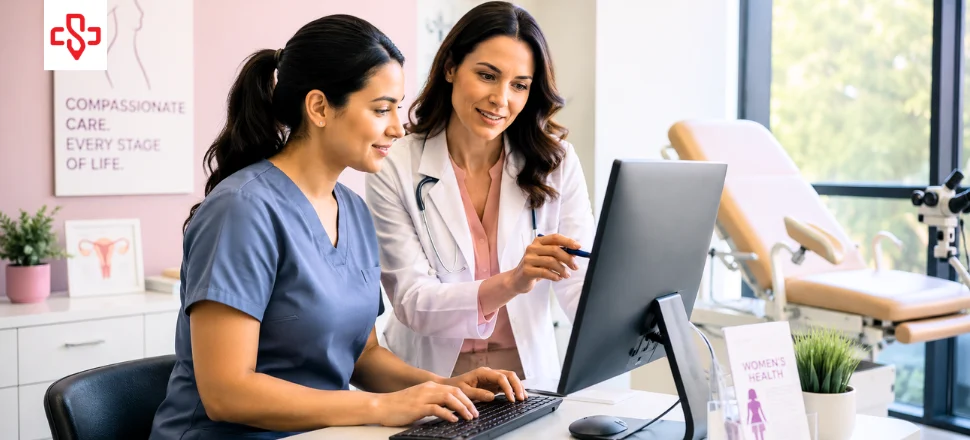
Obstetric and gynecologic practices juggle a documentation load unlike almost any other specialty. Prenatal visits, delivery notes, surgical reports, and routine gynecologic exams all demand precise, detailed records. That’s why more practices are turning to OB/GYN scribes to keep charts accurate without slowing down patient care. A dedicated scribe captures the clinical narrative in real time, so physicians can stay present with patients instead of buried in a keyboard.
This shift isn’t just about convenience. It’s about protecting the quality of women’s health documentation while easing the administrative burden that contributes so heavily to physician burnout.
Why OB/GYN Documentation Is So Demanding
Few specialties require the same level of documentation variety. A single day might include a well-woman exam, a high-risk prenatal consult, a postpartum follow-up, and an in-office procedure. Each encounter type carries its own templates, coding requirements, and clinical nuances. Add in ultrasound findings, lab trends, and delivery timelines, and the charting load multiplies quickly.
Without support, physicians often finish appointments only to spend hours afterward finishing notes. This delayed documentation increases the risk of missed details and contributes directly to physician burnout symptoms that many OB/GYNs already report.
How OB/GYN Scribes Support Better Documentation
A trained scribe works alongside the physician during each encounter, documenting the visit as it happens. Instead of reconstructing details from memory later, the physician reviews a note that’s already structured, accurate, and ready for the chart. This real-time approach reduces errors and shortens the time between visit and completed documentation.
For OB/GYN practices specifically, scribes learn to track pregnancy timelines, document ultrasound and lab results consistently, and capture the layered detail that gynecologic surgical notes require. This kind of specialty-specific training is very different from what a general scribe on a outpatient scribe service might handle for a primary care clinic.
The Impact on Patient Care
When physicians aren’t splitting attention between the patient and the screen, the visit itself changes. Patients feel heard. Sensitive conversations, like fertility concerns or postpartum mental health, get the full attention they deserve. This matters enormously in women’s health, where trust and communication often shape whether a patient returns for follow-up care.
Scribes also help ensure that sensitive details are captured completely and consistently, which supports continuity across a patient’s ongoing care. This consistency is especially valuable for practices coordinating with hospital scribe during labor and delivery, when accurate handoff documentation is critical.
Reducing Administrative Burden and Improving Efficiency
Time saved on documentation translates directly into more time for patients. Many OB/GYN practices that add scribe support see same-day note completion become the norm rather than the exception. This shift also reduces the after-hours charting that so often eats into physicians’ personal time.
Efficient documentation supports better billing accuracy too. Detailed, real-time notes make it easier to capture the correct level of service and reduce claim denials tied to incomplete records. This connects directly to medical scribes revenue cycle improvements that many practices report after onboarding scribe support.
OB/GYN Scribes vs. Traditional Documentation Methods
The table below compares common documentation approaches used in OB/GYN practices today.
| Documentation Method | Average Note Completion Time | Documentation Accuracy | Physician Face Time with Patient |
|---|---|---|---|
| Manual charting (post-visit) | Same-day to 24+ hours | Variable, memory-dependent | Reduced by screen time |
| Voice dictation software | Minutes to hours | Moderate, requires editing | Improved but still divided |
| OB/GYN scribes | Real-time to same-visit | High, specialty-trained | Fully present with patient |
What the Research Says
Clinical documentation quality has a measurable relationship with both physician workload and patient outcomes. Research published through the National Library of Medicine has examined how scribe integration affects clinical workflow and documentation efficiency across specialties, offering useful context for practices considering this model. You can review related findings at PubMed.
Choosing the Right Scribe Partner for Your Practice
Not every scribe program is built the same way. OB/GYN practices benefit most from scribes who receive specialty-specific training, understand obstetric terminology, and know how to document surgical and prenatal encounters correctly from day one. Practices considering this step should also look at how a scribe program integrates with existing EHR systems and workflows, since smooth EHR implementation support can make the transition far easier for the whole care team.
The right partner will also offer flexibility, whether that means in-person support during clinic hours or virtual scribes covering high-volume days. Matching the scribe model to your practice’s actual patient flow makes the biggest difference in results.
Bringing It All Together
Women’s health documentation carries real weight. It shapes billing accuracy, care continuity, and the quality of the patient relationship. OB/GYN scribes give physicians a way to meet that documentation demand without sacrificing the time and attention patients need during some of their most important visits.
Scrib.eology offers specialty-trained OB/GYN scribes designed to support the unique documentation needs of women’s health practices. If your team is ready to reduce charting time and improve note quality, reach out to learn how a dedicated scribe program can fit your workflow.