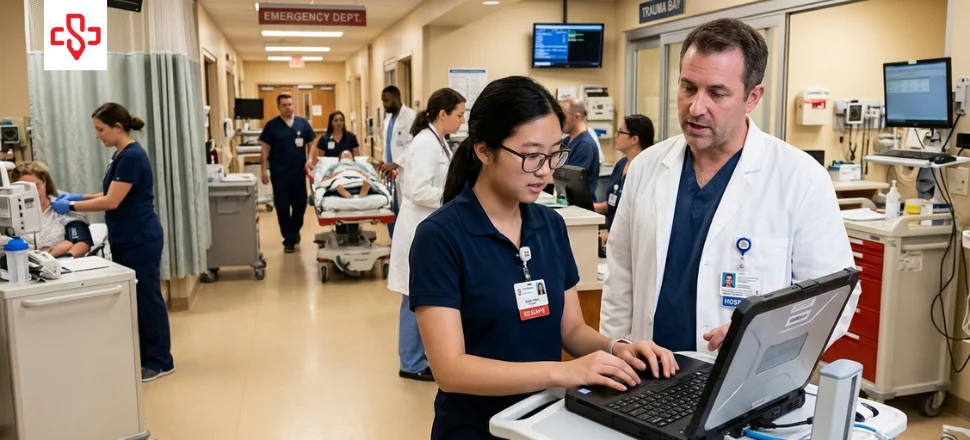

ENT scribes give ear, nose, and throat specialists back the hours that charting takes away. ENT physicians diagnose sinus disease, treat hearing loss, and perform complex head and neck procedures. However, every visit also demands detailed documentation. As a result, that paperwork often follows them home and fuels burnout. Because scribes record encounters in real time, physicians can focus on patients instead of keyboards. Overall, this post explains how ENT scribes work and why more practices are adding them.
Why Burnout Hits ENT Practices Hard
Burnout affects every specialty, and ENT is no exception. In addition, excessive paperwork and EHR time rank among the leading causes. Meanwhile, ENT workflows add extra pressure in several ways:
- Complex exams and procedures require detailed notes.
- Physicians coordinate with audiologists, surgeons, and primary care providers.
- Chronic conditions like allergies and sleep apnea need ongoing follow-up.
- Billing, coding, and portal messages add clerical work.
Consequently, many physicians finish notes late at night. That time cuts into rest and family life. Therefore, a strong physician burnout support plan starts by removing that documentation load.
What ENT Scribes Do During a Visit
A medical scribe is a trained documentation specialist. Scribes capture the history, exam findings, diagnoses, and treatment plan directly in the EHR. While they work on-site or remotely, they stay with the physician throughout clinic. In practice, outpatient scribes become an extension of the care team. Therefore, the physician finishes documentation before leaving the clinic.
Five Ways ENT Scribes Reduce Burnout
1. Faster Clinical Efficiency
ENT scribes chart while the physician examines the patient. For example, they record findings from a nasal endoscopy or audiometry as they happen. They also pull prior imaging and test results quickly. As a result, physicians spend less time between patients and make decisions faster. Better clinical efficiency means a smoother day for everyone.
2. A Lighter Administrative Load
First, clerical work drives much of the strain. One Annals of Internal Medicine study found that physicians spend nearly two hours on EHR and desk work for every hour of direct patient care. Instead, ENT scribes take on much of that work. For example, they document visits, enter orders and follow-up instructions, and prepare visit summaries. Consequently, physicians switch between clinical and clerical thinking far less often.
3. Better Patient Engagement
Patients notice when a physician types through the visit. ENT appointments often involve sensitive symptoms and complex procedures, so clear communication matters. Once a scribe handles the notes, the physician can make eye contact and listen closely. In turn, patients feel heard. They also tend to follow treatment plans more consistently.
4. Stronger Work-Life Balance
Because they carry no stack of unfinished notes, physicians leave clinic on time. Additionally, they avoid late-night charting and weekend catch-up. Instead, they can rest, study, and spend time with family. Over the long term, that balance protects career satisfaction.
5. More Accurate Documentation
Accurate notes support clinical quality, legal safety, and proper reimbursement. This matters most for procedure-heavy ENT cases. Skilled scribes use the right terminology and help keep charting consistent. They also support accurate CPT and ICD-10 coding. In addition, complete notes strengthen revenue integrity and make audits easier.
The Return on Investment for ENT Scribes
A scribe adds cost, but the payoff is often larger. Faster charting lets physicians see more patients and clear backlogs. Cleaner documentation also leads to fewer claim denials and quicker billing cycles. For a closer look at the numbers, see this guide to scribe program ROI.
The Future of ENT Scribes
Documentation keeps evolving. Many ENT clinics now use virtual medical scribes who work through secure platforms. They offer the same real-time support without taking up clinic space. Meanwhile, AI tools are starting to assist with voice recognition and transcription. Scribes are adapting by pairing that technology with human judgment. Together, they protect context, accuracy, and compliance.
Conclusion
ENT specialists help patients breathe, hear, and speak better. Yet documentation often crowds out the time they need for care. ENT scribes offer a sustainable fix. They reduce administrative work, improve efficiency, and restore balance. Most importantly, they help physicians reclaim their time and focus.
Ready to see the difference? Request a free quote from Scribeology and build a more efficient, patient-centered ENT practice.