

It is 7:40 a.m., and the first patient arrives in twenty minutes. The physician opens the chart and finds a long history, three outside reports, and no summary. So the hunt begins. A pre-charting scribe prevents that scramble. This team member prepares every chart before the visit, so the physician starts the day informed instead of behind. In this post, you will learn what pre-charting involves, why it works, and how to start in your own practice.
What Does a Pre-Charting Scribe Do?
A pre-charting scribe reviews each patient’s record ahead of the appointment and organizes what the physician needs. The scribe does not diagnose or make clinical decisions. Instead, the scribe handles the search work around those decisions.
Typical tasks include:
- Summarizing the last visit and open problems
- Pulling recent labs, imaging, and outside records
- Pre-filling the note with history and medications
- Flagging gaps, such as overdue screenings or missing referrals
Together, these steps turn a blank chart into a ready one. Many practices then pair pre-charting with the real-time charting covered in these medical scribe duties.
Where the Clinic Day Really Goes
Most physicians feel the problem before they measure it. Researchers have measured it, though. In a time and motion study of 57 physicians, only 27% of office hours went to direct clinical face time. EHR and desk work took nearly 50%. On top of that, physicians reported one to two more hours of clerical work at home each night (Sinsky et al., Annals of Internal Medicine).
That hidden work explains why schedules slip. A few extra minutes of chart review per patient does not look serious. Yet over a full day, those minutes stack up and push every visit later. The same pattern fuels the physician paperwork that follows doctors home.
How Pre-Visit Prep Shortens the Day
Pre-charting moves the search work out of the visit and into the quiet hours before it. Consequently, the physician spends visit time with the patient instead of the screen. The infographic below shows how a pre-charted day flows.
A Pre-Charted Clinic Day in 4 Steps
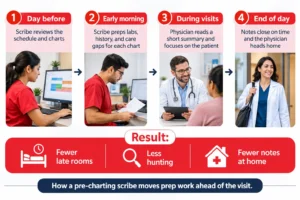
Notice the pattern. Prep happens early, the visit stays focused, and the notes close on time. Therefore, rooms run on schedule, afternoons stay calmer, and the physician leaves when the clinic closes.
Three Visit Types That Gain the Most
Chronic Care Follow-Ups
These visits depend on trends. A scribe can line up blood pressure readings, A1c values, and medication changes in one view. As a result, the physician sees progress at a glance.
Specialty Referrals
Specialists need outside records to decide well. When the scribe gathers imaging and consult notes first, the visit starts with answers instead of questions.
Annual and Preventive Visits
These visits carry long checklists. A scribe can flag overdue screenings and vaccines in advance. Then the physician works through each item in order.
Remote teams can handle this prep too. A digital charting scribe works inside the EHR from anywhere.
Signs Your Practice Needs Pre-Charting
Not every clinic needs the same fix. Still, these signs often point to a prep problem:
- Visits start late because the chart is not ready
- Physicians finish notes at home
- Staff repeat the same record searches daily
- Care gaps surface only after the patient leaves
If two or more sound familiar, prep is likely your bottleneck.
Pre-Charting vs. Real-Time Charting
The two methods work together, not against each other. Pre-charting prepares the chart before the visit. Real-time charting records the visit as it happens. Because each covers a different stage, using both closes the loop. The physician walks in informed and walks out with a finished note. In contrast, using only one leaves a gap at the start or the end of the visit.
How to Start Pre-Charting in Your Practice
Start small and keep the process repeatable. Follow these steps:
- Pick one clinic day or one provider for a two-week pilot.
- Agree on what every pre-chart must include.
- Set a prep window, such as the afternoon before.
- Review the first charts together and adjust the templates.
- Track late rooms, note completion time, and after-hours minutes.
Expect a short adjustment period. During the first two weeks, templates change and prep time shrinks. By week four, most teams settle into a steady rhythm. Therefore, judge results after a full month, not a single day. If you lack staff for this work, virtual medical scribes can prep charts remotely.
Common Concerns About Pre-Charting
Accuracy comes first. The physician reviews and signs every note, so the scribe’s prep never replaces clinical judgment. A good scribe also flags unclear items instead of guessing.
Privacy matters just as much. Scribes work under HIPAA rules and access only the records their role requires. Confirm training and access controls before launch.
Cost raises a fair question. However, saving even thirty minutes of physician time each day creates room for another visit or an earlier finish. Less after-hours charting also helps with provider burnout, which makes the benefit last.
Give Your Clinic Day a Head Start
A pre-charting scribe does not add work to your day. It removes the work that hides inside it. When prep happens first, visits run smoother, notes close faster, and evenings come back.
Scribe.ology trains scribes to pre-chart, document in real time, and keep your schedule on track. Explore our medical scribing services to see which model fits your practice.